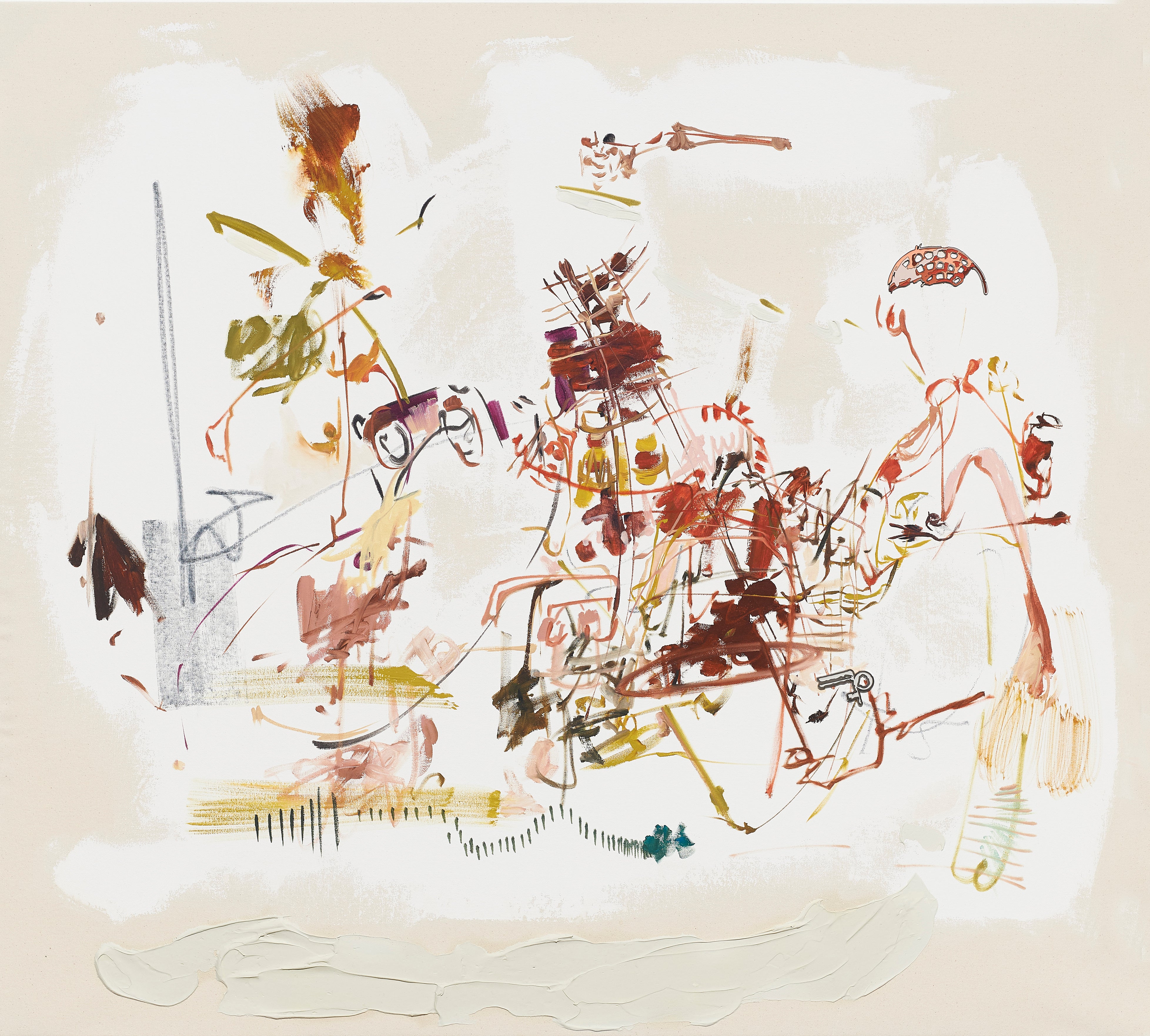
A mixed media collage in the abstract expressionist style combines gestural painting, drawing on canvas, and objects such as enameled pins and embroidery. The gestural marks and objects float within a beige format - there is no cropping. A lighter halo pushes the beige ground, separating the "figure" from the ground.

Art Collection

The Martin Marietta Center for the Performing Arts is pleased to showcase artworks from the City of Raleigh Municipal Art Collection. The Municipal Art Collection holds more than 600 fine art and public art pieces by local, state, and national artists.

Displayed throughout Raleigh in public buildings, parks and other city-owned property are works that include: paintings, prints, drawings, textiles, posters; and large-scale sculptures as well as artworks used for education purposes at the Pullen and Sertoma Arts Centers.

Color Library

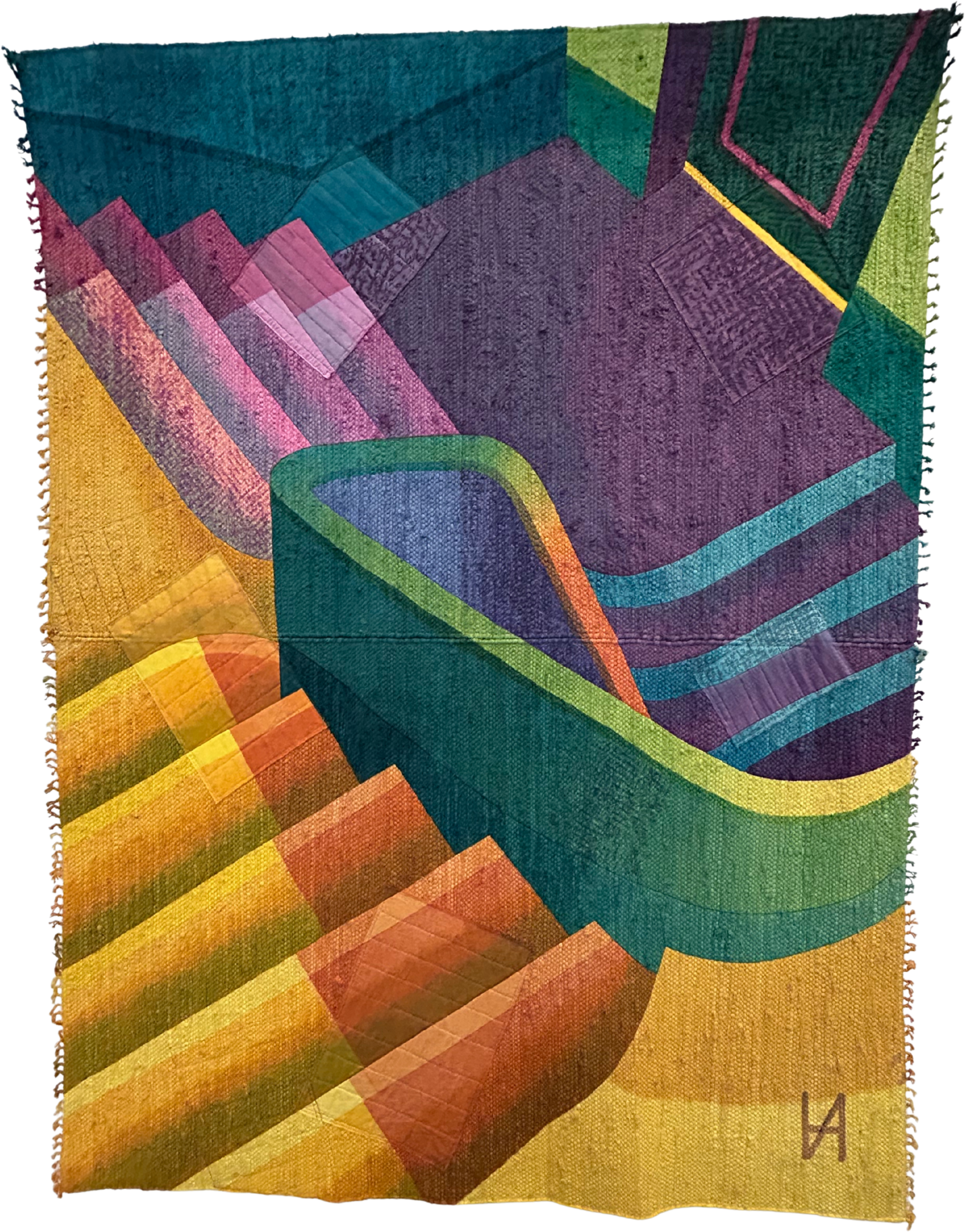
Heather Allen

Painted and dyed plain weave cotton tapestry

Location: A.J. Fletcher Opera Theater, Lobby Staircase

Heather Allen is a mixed-media artist who primarily creates wall pieces that incorporate 2D and 3D elements, clay and cloth, dyed, collaged, broidered, quilted, sewn, and woven elements. Her inspiration stems from various objects such as stairs, the natural world, and ceramic work.   Color library is one such work, the staircase becoming a symbolic space meant to serve as a metaphor for expressing the various journeys, transitions, and thresholds within life’s experiences. Allen’s work draws on the viewer’s intimate involvement with steps and portals to elicit feelings and personal interpretations.
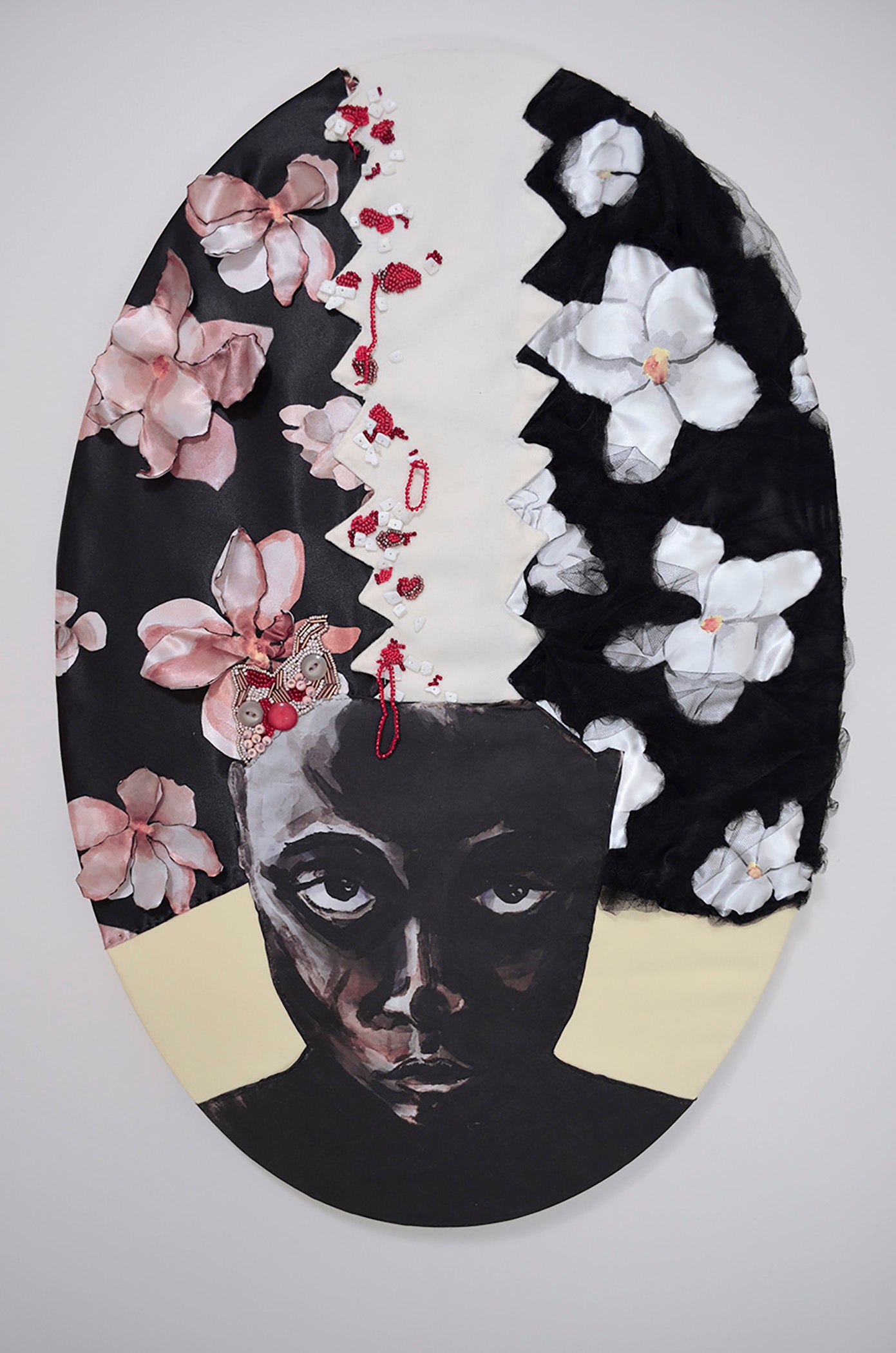
You Would Be Pretty Too

Jasmine Best

Digital print on fabric and beaded collage

Location: Betty Ray McCain Art Gallery (Meymandi Concert Hall, Lower Level)

​​​​Best is a true Southern artist who draws from her personal memories to create dialogues about black female identity in the South and in predominantly white spaces. This piece is titled after a statement many black girls hear from those who believe black women would be more attractive if they subscribed to Eurocentric beauty standards and chemically straightened their hair.  The collage uses components normally used to depict beauty to represent something ugly and painful. The left side of the piece represents damaged hair as a result of this process, and the right represents full, alive, thick natural hair untouched by it. 

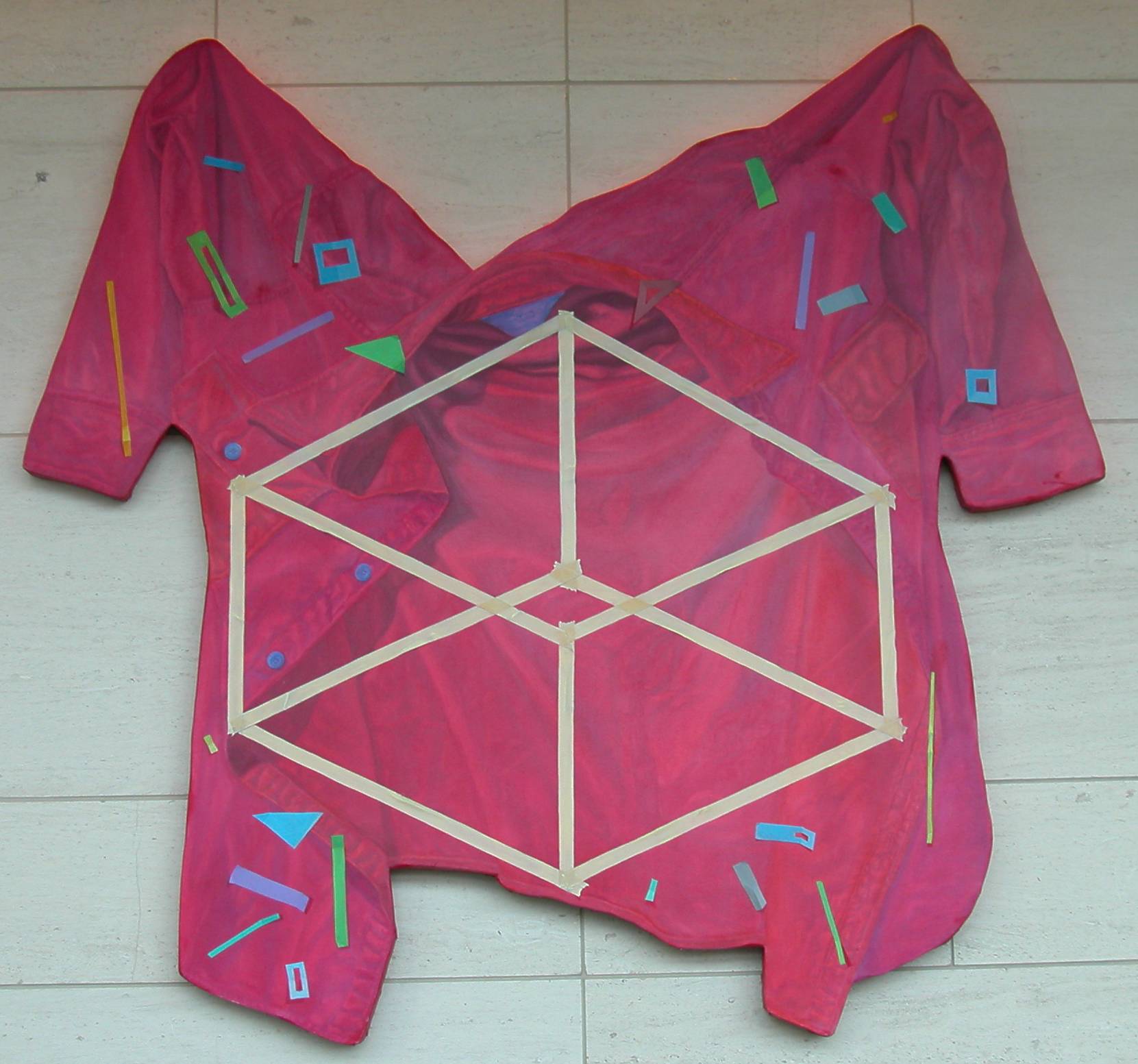
The Red Shirt

George Bireline

Acrylic on canvas

Location:  Meymandi Concert Hall, Lobby

In the 1960s and 1970s, North Carolina artist George Bireline began integrating everyday objects into his paintings, blending Pop Art, trompe l’oeil, and Conceptualism. Red Shirt exemplifies this style with its irregularly shaped canvas, a distinctive feature of his work. The canvas is cut to resemble a drooping, oversized shirt, a commonplace item separated from its original function and made into an object of aesthetic contemplation.

Bireline enhances the visual tension by painting geometric shapes onto the surface, specifically a cube that appears to be made of masking tape. This forces the viewer to confront the painting’s dual nature: it is both an illusionistic representation of a shirt and a flat, abstract surface. Bireline sought to make us acknowledge that illusion may be the only reality we know, inviting us to complete the work with our own perceptions.

Construction 1972

George Bireline

Acrylic on canvas

Location: A.J. Fletcher Opera Theater, Upper Lobby

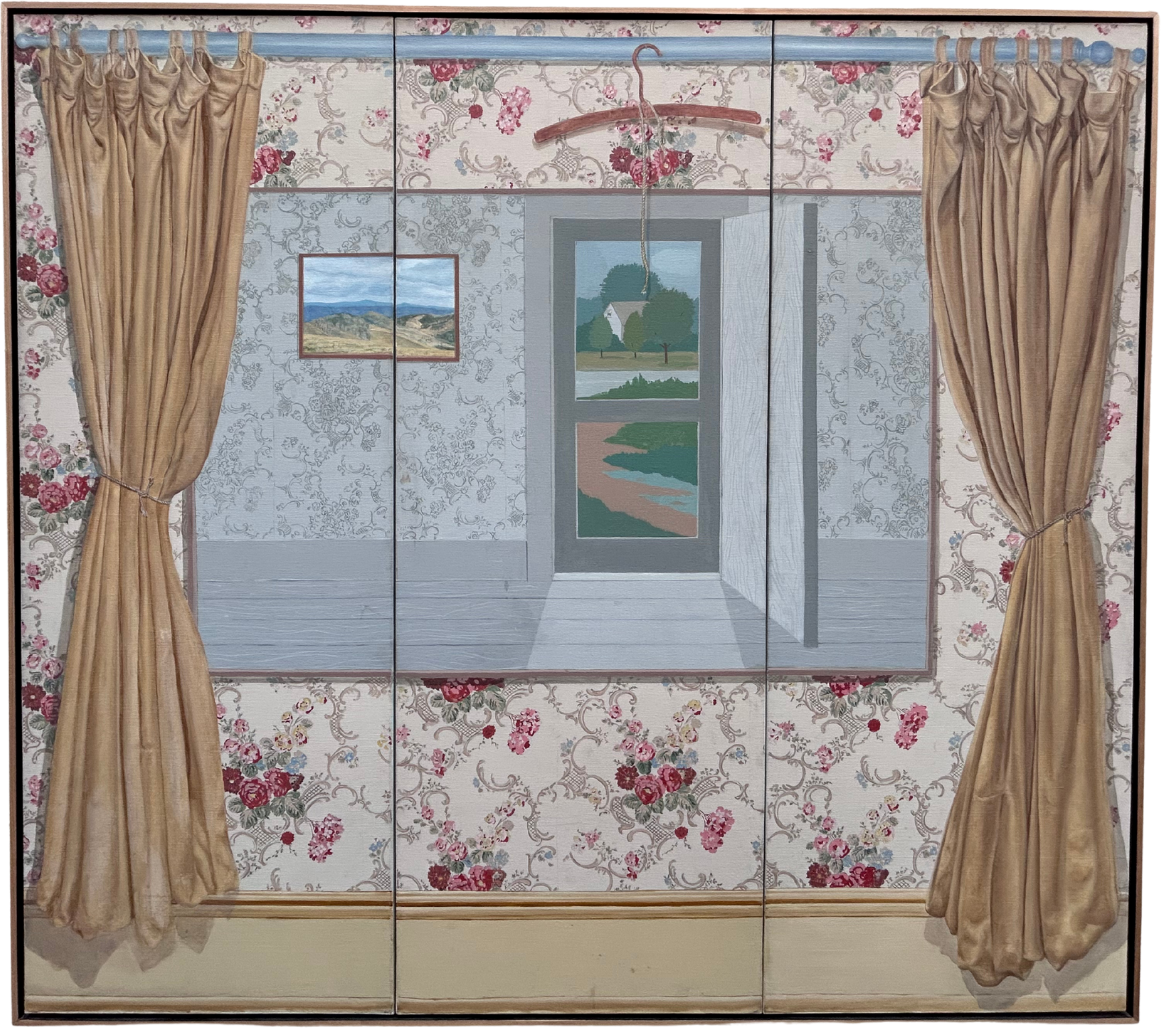
A central figure in North Carolina art for decades, George Bireline was a veteran of WWII and a respected professor at NC State University's School of Design for over 30 years. This triptych is a visual puzzle that explores the endless relationship between painting, space, and perception. It depicts an interior wall, complete with drawn curtains. Between the curtains is a framed painting that itself shows another home interior, where a third painting is visible, creating a nested, self-referential scene.

Throughout the late 1960s and 1970s, Bireline merged Conceptualism, Pop Art, and trompe l’oeil to question the nature of reality. By meticulously rendering a spacious picture-world only to remind us that it is merely a flat, painted surface, Bireline highlights painting’s dual nature, its essential abstraction, and its potential for illusion.

A Conversation: Mothers & Daughters Series

Susan Brabeau

Oil/Testor Enamel on canvas

Location: Betty Ray McCain Art Gallery (Meymandi Concert Hall, Lower Level)

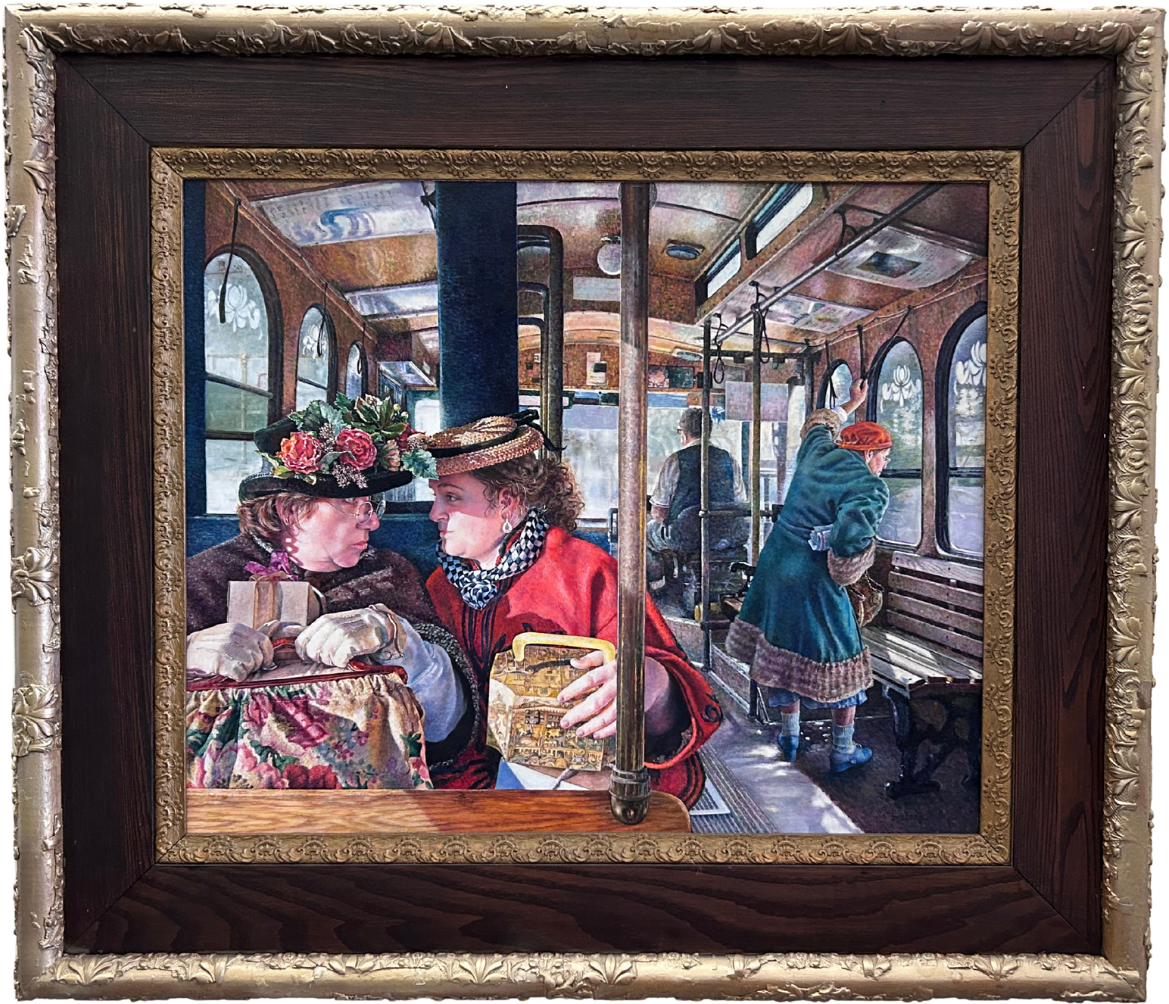
Susan Brabeau is a magic realist painter who blends realism with fantasy and carefully curates her compositions. Like a film director, she wants to depict an idea, a sentiment, or a moment that vanished in time. She creates a cast of characters, places, and things that she choreographs in meticulous drawings and paintings. Beyond ordinary description, she paints each personage, each piece of furniture, and each leaf on a plant more vivid than reality with knowledgeable skill from many years of observation and artistic practice. 

Reality Doesn't Care

Brandon Cordrey

Oil paint and collage

Location: Betty Ray McCain Art Gallery (Meymandi Concert Hall, Lower Level)

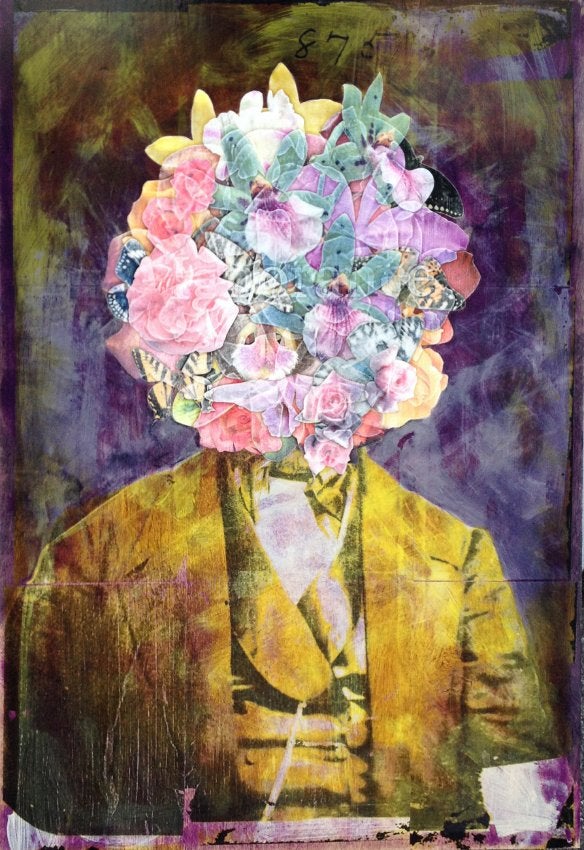
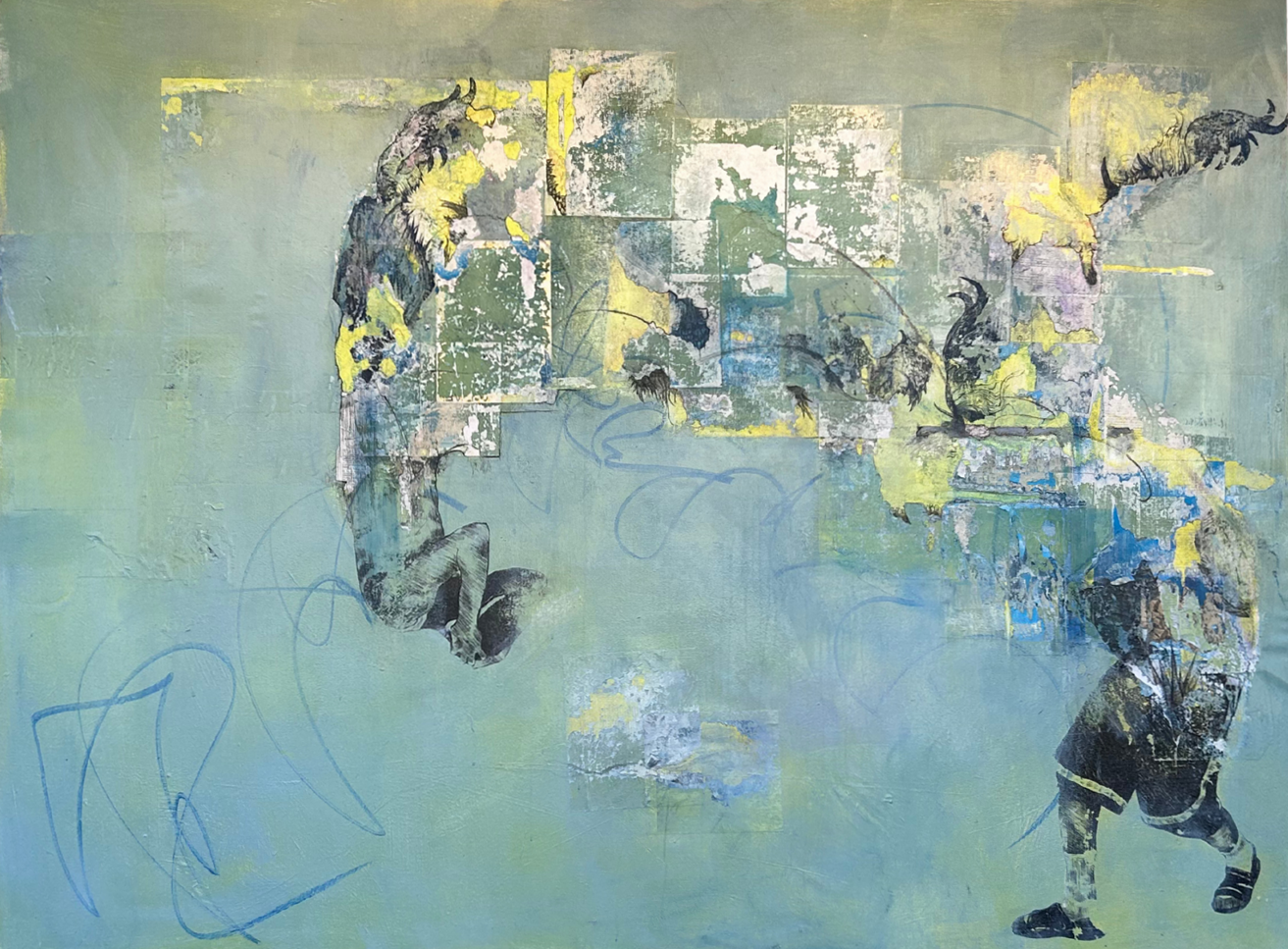
Viewing humans as data processing units, the artist considers how we are bombarded with information, how we internalize or contextualize that information, how we change it, and then regurgitate it back into the atmosphere. The work looks particularly at information from the media, how it can be manipulated, and how rhetoric and opinion can be presented as truth, particularly in politics. This work was created using a multitude of processes, including drawing, image transfer, collage, acrylic and oil painting, and glazing. Files used as image transfers were found in the Library of Congress and are the basis for this construction

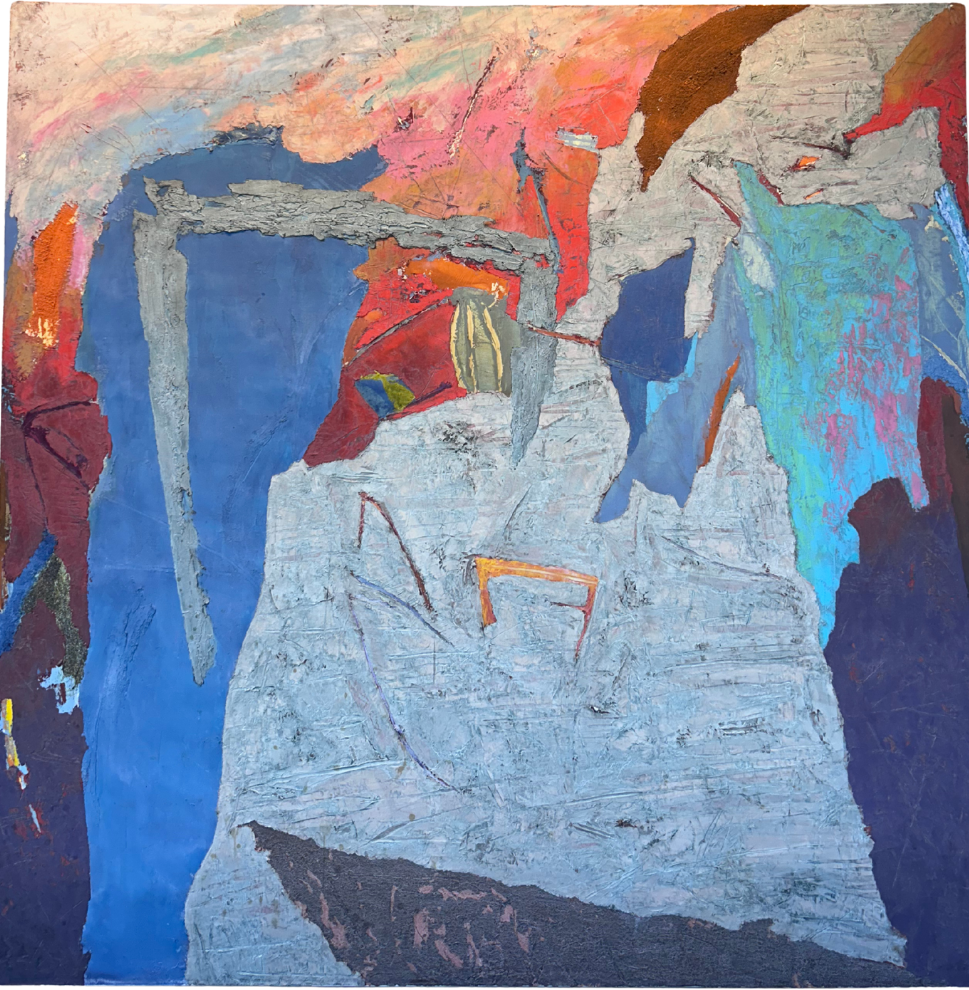
I Remember Where I Came From: Ashanti, Hausa, Dogon, DaBelly

Chandra Cox

Acrylic on canvas

Location: Meymandi Concert Hall, Lobby

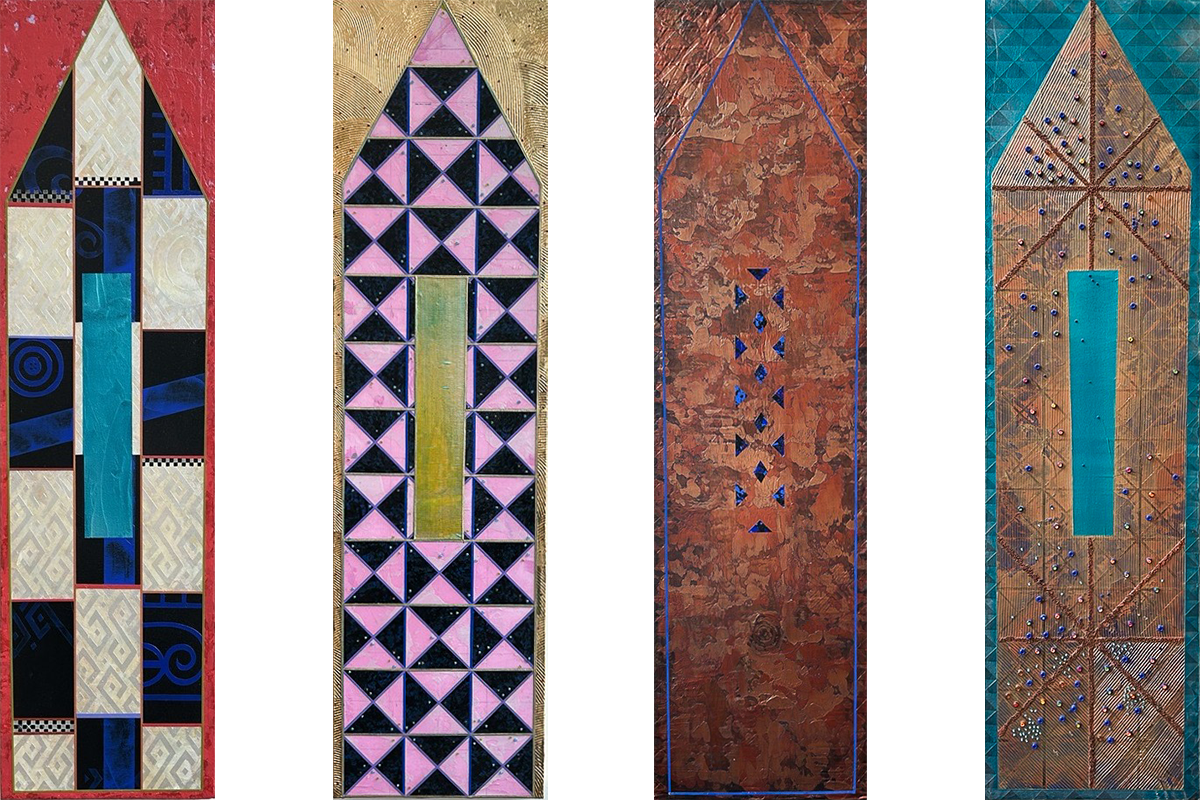
Cox is a painter who paints like a printmaker, fitting together interlocking sections of color, with the work laid down flat. But, she also paints like a sculptor, her pieces possessing such a physicality that they almost seem built rather than imagined. Cox creates illusive joinery. Working in acrylic on canvas or panel, she layers shapes, colors, patterns, textures, and symbols into a dense architecture of meaning.

This art piece is a variation of the Door of No Return–the dreaded last stop on Africa’s west coast before the newly captured people were loaded into the hellish ships bound for the slave markets of the Americas. For Cox, that infamous door marks both an end and a beginning. It is also the Door of Entry, for Africans passing through it became a new people. The slotted door-like form that also has characteristics of an altar, and of the human body, is encrusted with African forms and symbols, derived from textiles, masks, sculptures, Ashanti gold weights and the marvelous visual code of adinkra symbols.

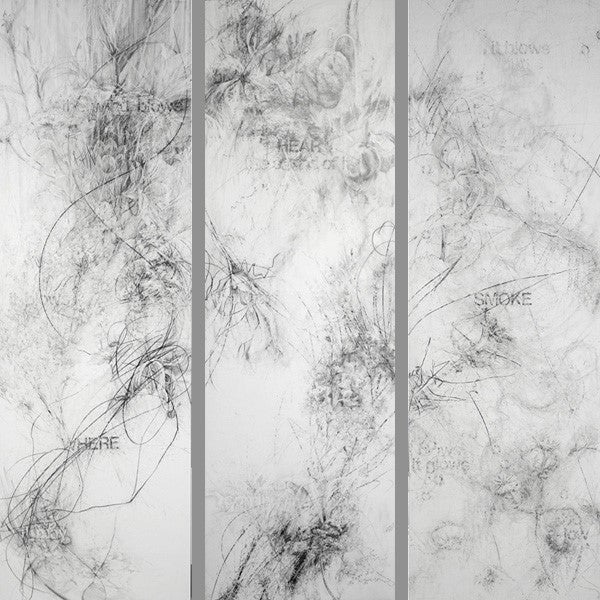
John 3:8

Kiki Farish

Graphite on Claybord

Location: A.J. Fletcher Opera Theater, Upper Lobby

The youngest of four siblings raised in Jacksonville, FL, Farish's work appears in multiple permanent collections. She draws on her personal experience with the death of her father to inform this piece.

“It is a piece that reflects my emotional struggle with my father James Speed Massenburg's death. Poppy buds repeated across the panels draw on the symbolism of flower language meaning eternal death. The text of John 3:8 which speaks of being "born again" with the wind as a metaphor, is alluded to within the drawing.” This piece mingles vivid scrawls with ghostly scribbles, hinting at how memory or contemplation may appear if illustrated. Viewing this piece invites physical movement as well as emotional reading of the marks and text from various distances.  

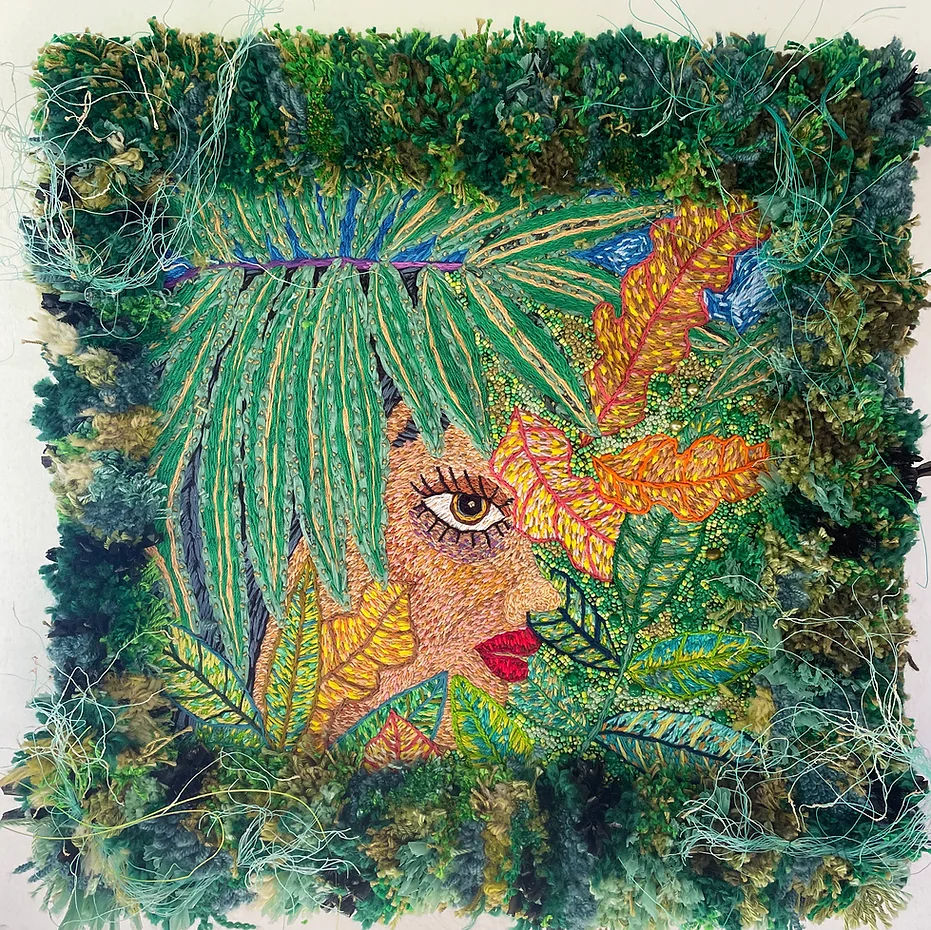
Guardian of the Forest

Patricia Ferreira

Embroidery floss, cotton, wool, acrylic yarn, plastic bags, thread, plastic and glass beads, and upcycled fabric

Location: Betty Ray McCain Art Gallery (Meymandi Concert Hall, Lower Level)

Ferreira’s work is inspired by life and the idea that we are only a small part of a higher organism. This is realized through a sense of nature and trying to find balance. There is an inevitable struggle with tension between opposing forces. Central to the work is the employment of the most paradoxical of all materials: Plastic. While it is one of the most successful human inventions in the history of material science, its widespread use is one of the most significant contributors to the current state of our environment. Patrizia notes, “Working with the plastic debris of our society, incorporating yarn, thread, fabric remnants, heirloom textiles, and found waste, I get to reconcile, to stitch, to patch, to mend the world around me.

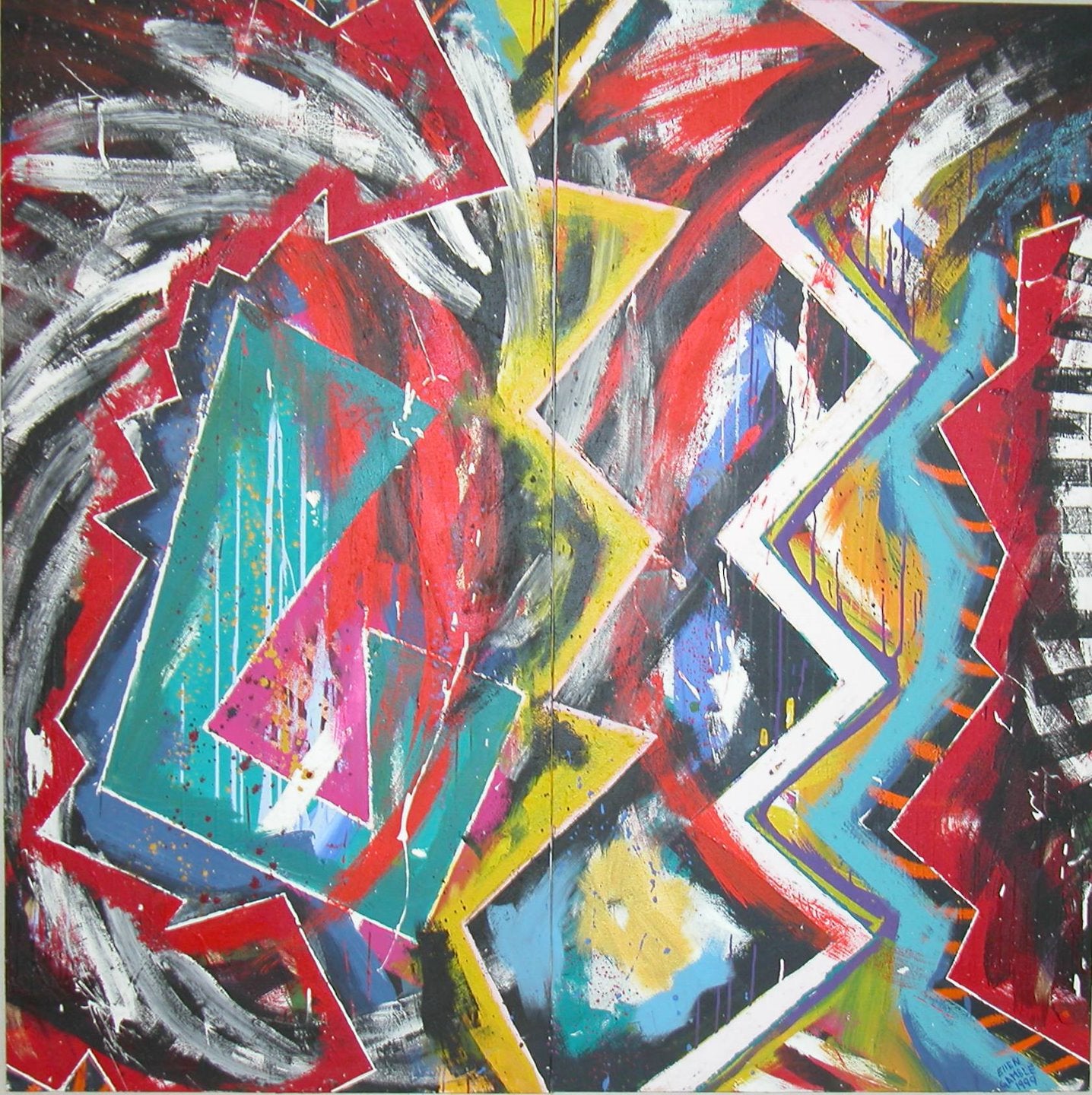
Coca-Cola and the Junkman

Ellen Gamble

Acrylic on canvas

Location: A.J. Fletcher Opera Theater, Lobby Staircase

This painting reflects Ellen Gamble’s deep engagement with Abstract Expressionism and her intuitive, psychologically driven approach to abstraction. Bold color passages, jagged geometries, and sweeping gestures generate a sense of tension and movement, balancing spontaneity with underlying structure. Gamble describes her process as combining the premeditative and the instinctive, allowing emotion to guide palette choices while remaining drawn to structural equilibrium. Gamble studied painting at the University of North Carolina at Chapel Hill from 1982 to 1983 under visiting New York artist Doug Sanderson, where she developed this distinctive visual language.

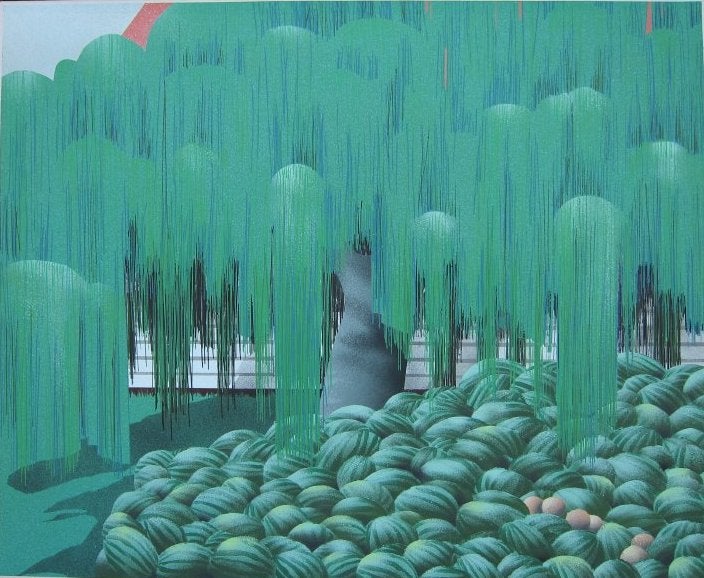
Summer Melons (A Truck Load)

Maud Gatewood

Acrylic on canvas

Location: Meymandi Concert Hall, Upper Lobby

Maud Gatewood drew deeply from her rural North Carolina roots, translating the familiar landscapes of her upbringing into bold, rhythmic compositions. In Summer Melons (A Truck Load), Gatewood transforms an ordinary agricultural scene into a study of pattern, texture, and form. The tightly packed melons and curtain-like foliage merge abstraction and representation, evoking both abundance and enclosure. Gatewood’s controlled geometry and subtle tonal shifts reveal her fascination with order within nature’s chaos. Painted during the height of her mature style, the work reflects her broader vision: to find beauty and structure in the overlooked details of Southern life, a region she loved and questioned with equal measure.

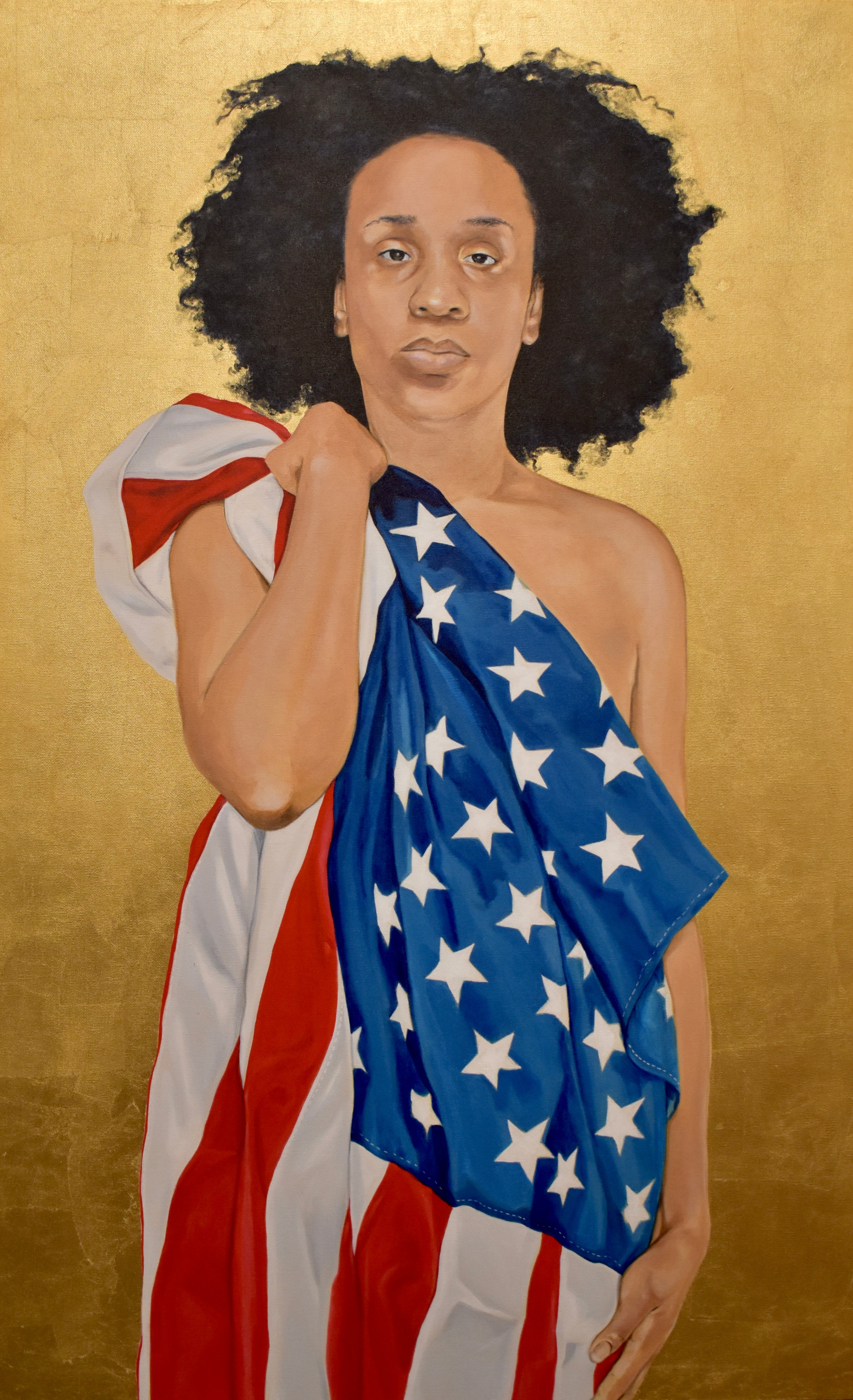
Liberty Enlightening the World

Clarence Heyward

Acrylic and gold leaf on canvas

Location: Betty Ray McCain Art Gallery (Meymandi Concert Hall, Lower Level)

Heyward uses painting as a tool for communication, examining his identity as a Black American man, husband, and father. His work is informed by how the media and historical documentation are used to inform and misinform the perception of Black Americans and our collective culture. He draws from his memories of television shows, movies, music, and pop-culture, which become metaphors or references used in his compositions.

This work references the Statue of Liberty. Heyward states, “The Black woman is freedom. She is the backbone of the family. She is a gift to America.”

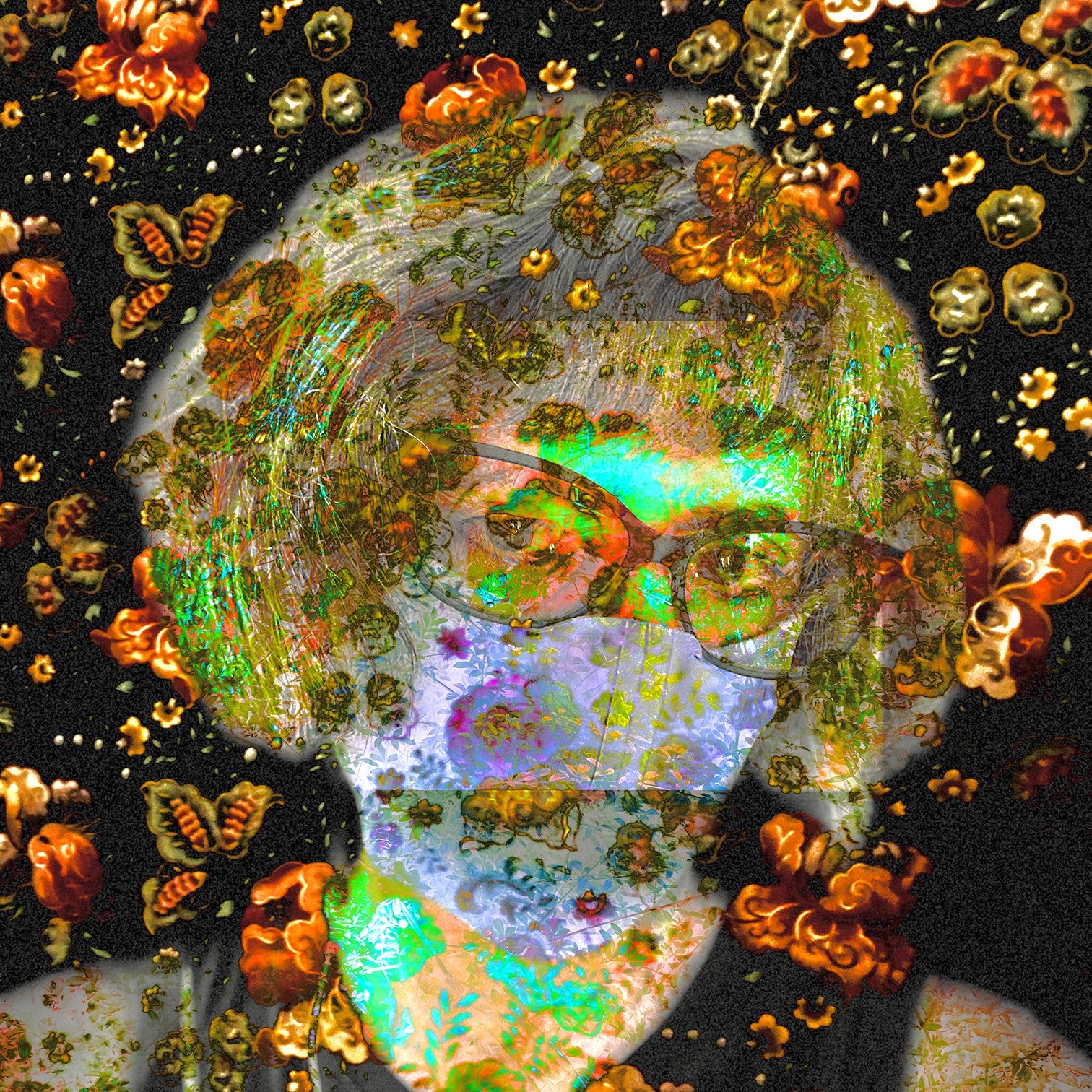
Masked in Violet and Orange

Tama Hochbaum

Archival digital print on metallic paper

Location: Betty Ray McCain Art Gallery (Meymandi Concert Hall, Lower Level)

Through subjecting her self-portraits to multiple digital processes, Hochbaum creates variation upon variation of her work, each stage of processing revealing a new creation. Her works, as she herself puts it, are “vibrant, deliberate, fabricated, staged composites that state, I am here, and this is my story.” Central to her art is variation, change, and self-exploration, consciously centering the self.  She never knows what the piece is going to end up being, whether a painting, a mosaic, a tapestry, or something else entirely. That is the beauty of it.

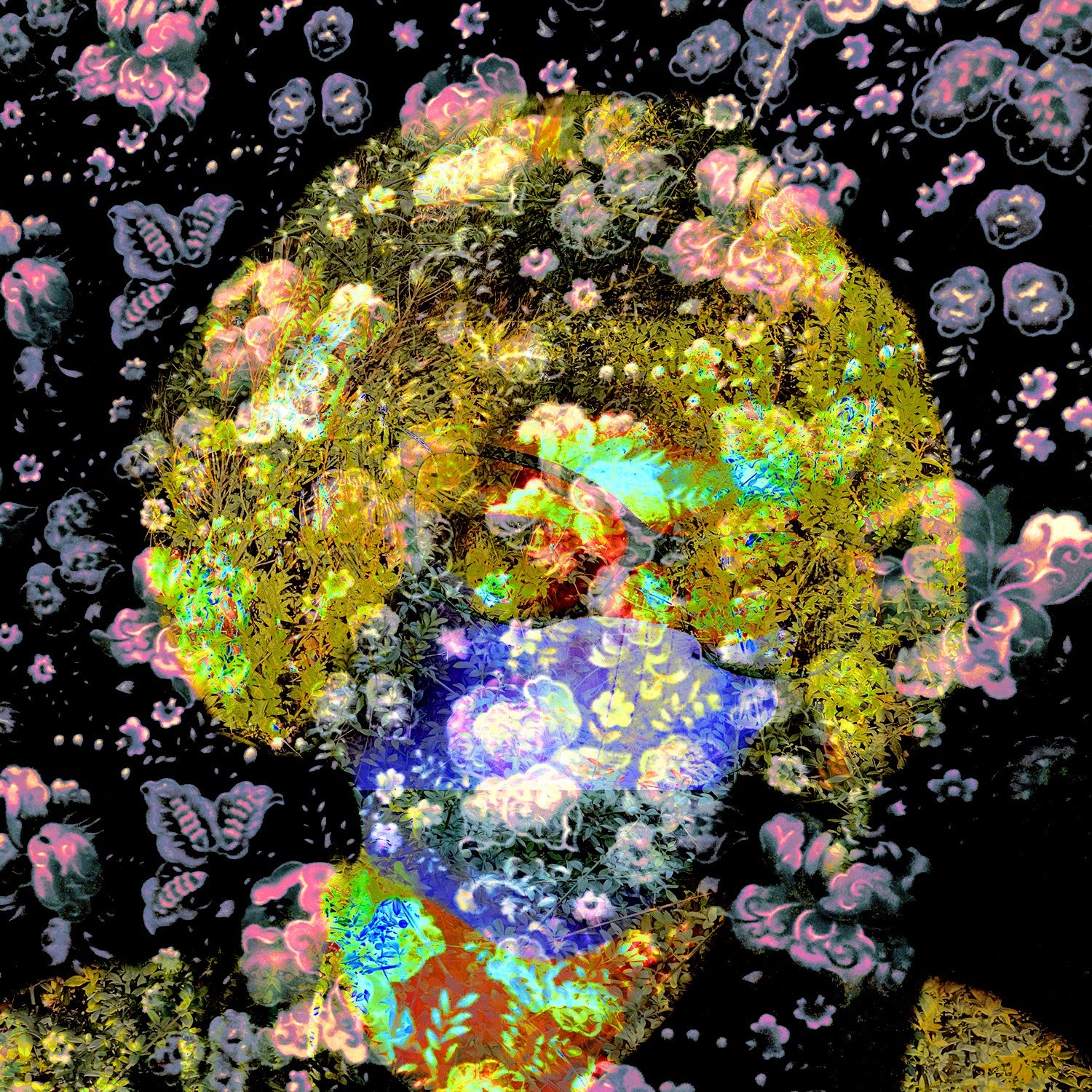
Flight of the Butterflies

Tama Hochbaum

Archival digital print on metallic paper

Location: Betty Ray McCain Art Gallery (Meymandi Concert Hall, Lower Level)

Through subjecting her self-portraits to multiple digital processes, Hochbaum creates variation upon variation of her work, each stage of processing revealing a new creation. Her works, as she herself puts it, are “vibrant, deliberate, fabricated, staged composites that state, I am here, and this is my story.” Central to her art is variation, change, and self-exploration, consciously centering the self.  She never knows what the piece is going to end up being, whether a painting, a mosaic, a tapestry, or something else entirely. That is the beauty of it.

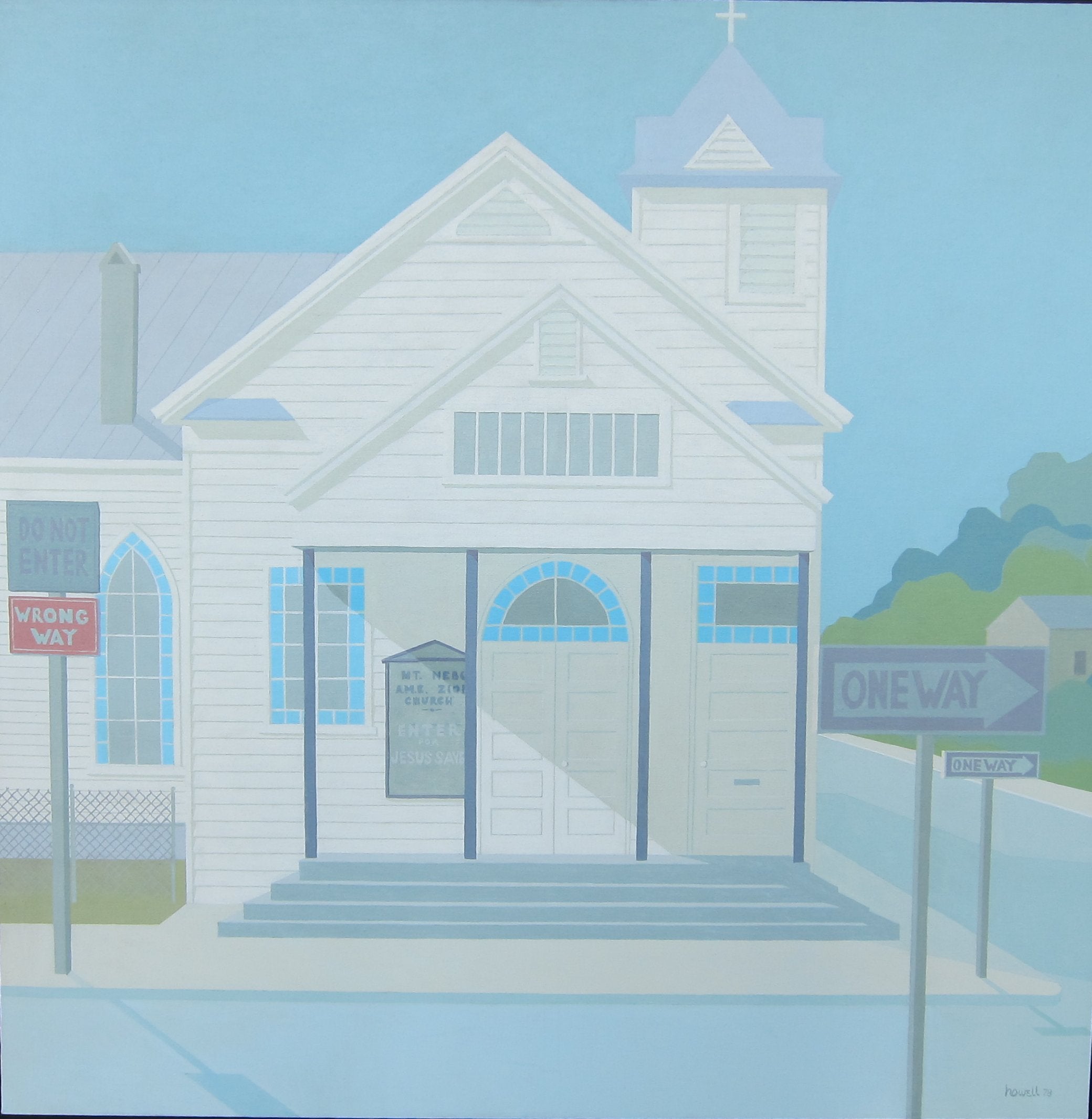
Mt. Nebo A.M.E. Zion Church, Wilmington, NC

Claude Howell

Oil on canvas

Location: A.J. Fletcher Opera Theater, Lobby

A native of Wilmington, North Carolina, Howell was inspired by the coastal scenery and activity of his hometown and its surroundings. Howell’s highly keyed canvases often feature the shrimpers, fishers, and tourists who populate the nearby piers and beaches. A master of color who reveled in the particular light available at land’s end, Howell refused to “paint anything unless I know all about it.”  This piece depicts Mt. Nebo A.M.E. Zion Church, showing us a part of his hometown, and exuding familiarity. The faded quality of the colors make it seem as if we are looking not just upon the church itself, but upon his memory of it. 

Dawn Welcome

Herb Jackson

Acrylic on canvas

Location: Meymandi Concert Hall, Lobby

A revered North Carolina artist and longtime Davidson College professor, Herb Jackson is known for his deeply contemplative, abstract paintings. His artistic process is described as an act of meditation and a journey of discovery. Jackson begins his work with a "blank" mind, allowing the painting to suggest its own direction. He builds his canvases through an intensive layering process, applying and scraping off a hundred or more layers of acrylic paint. Forms, marks, and gestures appear and disappear within this complex surface, with the final outcome being a survival of elements necessary to the "life of the whole."

Jackson considers his work part of nature, rather than a statement about nature, embracing the mystery of the unknowable. The resulting surface of Dawn Welcome is a vibrant visual record of time, memory, and experience.

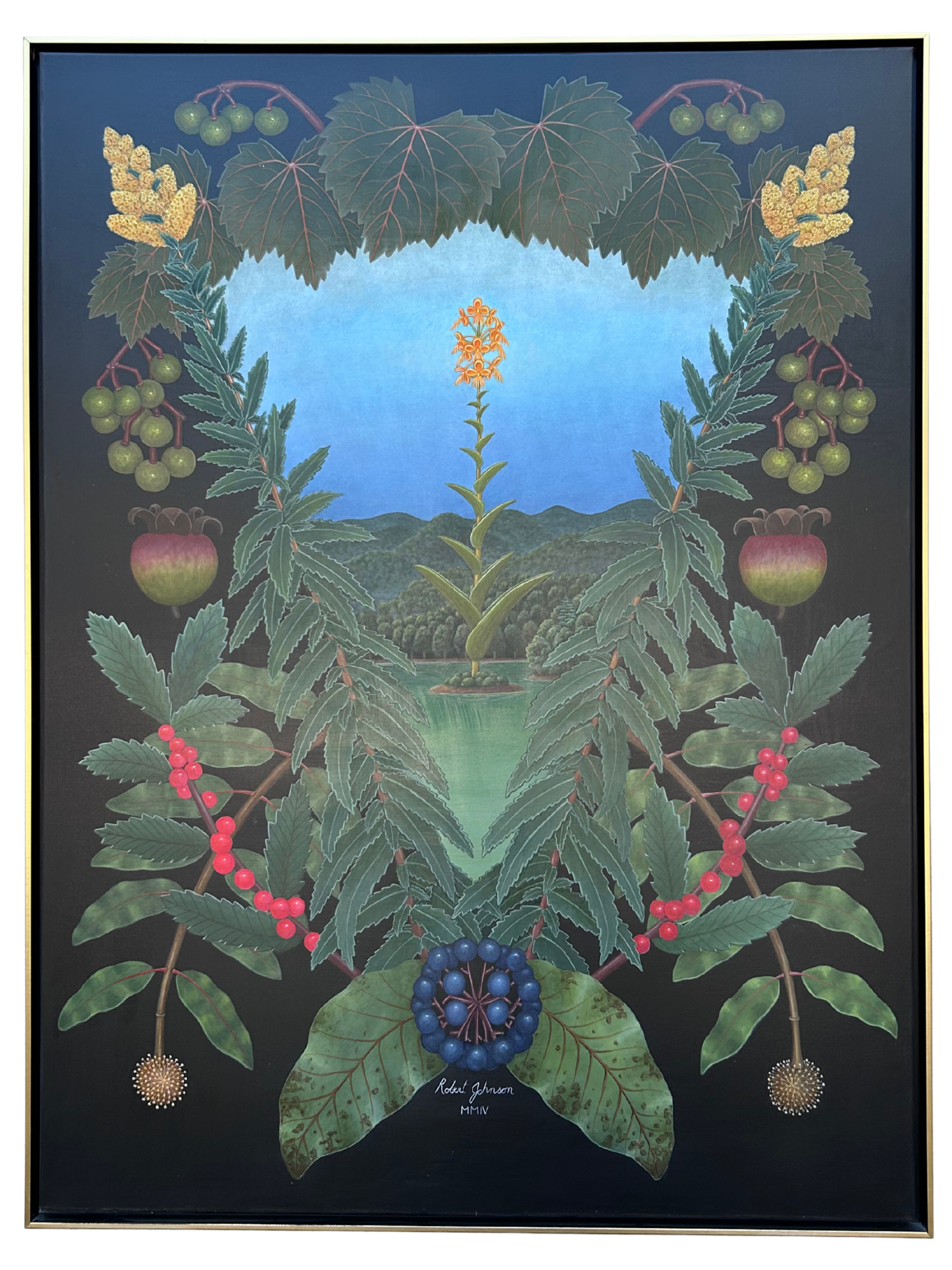
Fringed Yellow Orchid at Lake Fontana

Robert Johnson

Acrylic on canvas

Location: Meymandi Concert Hall, Upper Lobby

Robert Johnson captures the peacefulness and lyrical beauty of the natural world in this delicate painting. A student of nature, Johnson develops his botanical sketches into a symmetrical landscape mandala that celebrates the environment of Western North Carolina. The composition frames a view of Lake Fontana and surrounding mountains with a central Fringed Yellow Orchid rising toward the sky. The scene is encircled by detailed renderings of indigenous flora and natural elements, creating a unified whole. The artist's use of a black background accentuates the spectacular beauty of the landscape and the vibrancy of the botanical elements. Influenced by his artist mother and his brother Ben Johnson, a noted art conservator, Robert Johnson divides his time between studios in Vienna, VA, and Taos, NM.

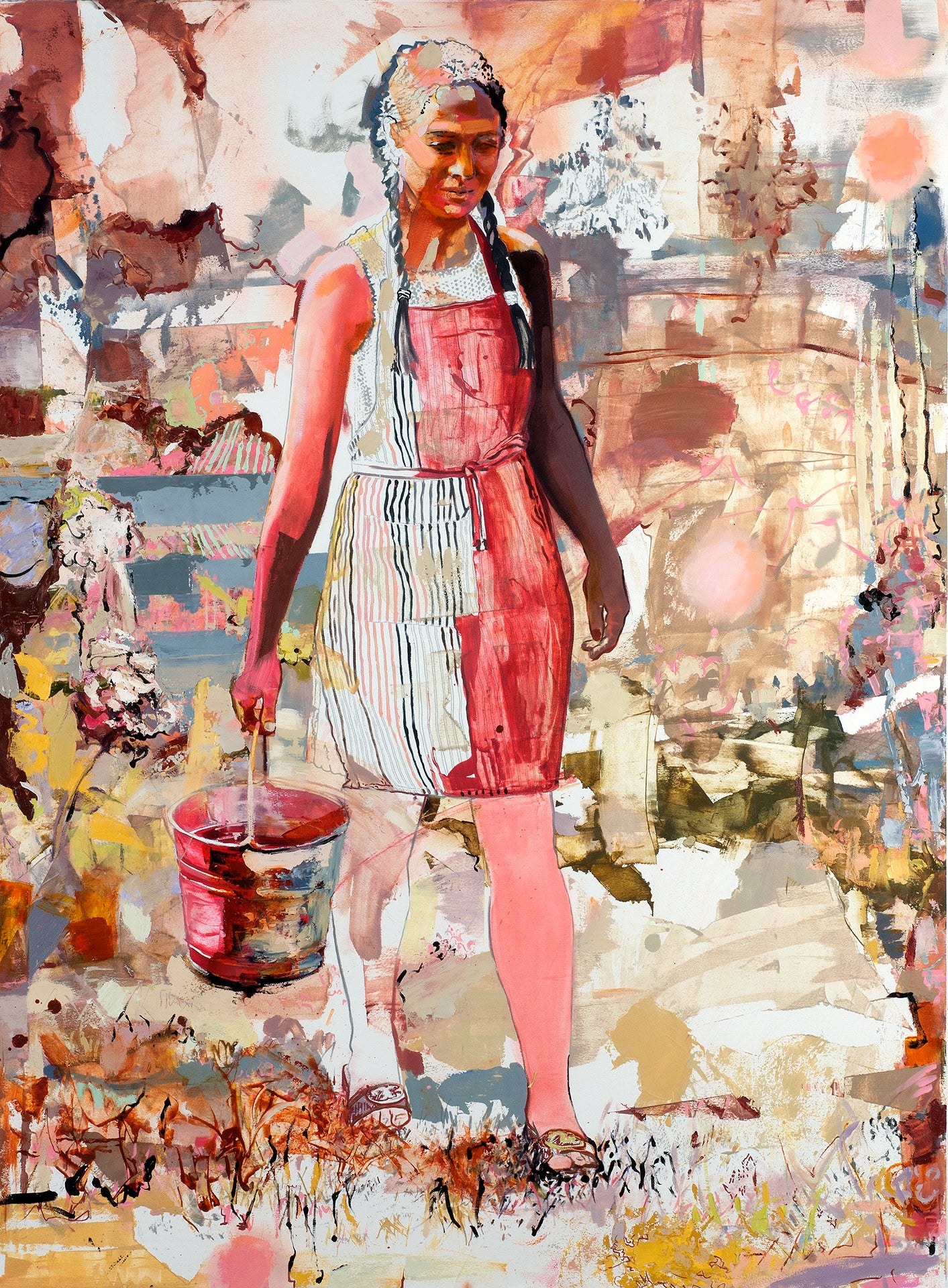
Paper Doll Series, 3151: The Labor Series (Red Bucket)

Page Laughlin

Oil and digital print on paper

Location: Betty Ray McCain Art Gallery (Meymandi Concert Hall, Lower Level)

The Paper Doll series is undoubtedly a tongue-in-cheek reference to child’s play. The paper doll is a reference to the format, media, and subject of these paintings. The digitally generated line drawing is a further reference to a coloring book, a surface designed to force the recognition of, if not the reconciliation within, the conflict between free agency and external control. Laughlin ultimately choosing not to color within the lines.

The Series includes images of individual women engaged in simple acts of traditional domestic labor: folding laundry, watering, digging, etc. These acts, simple, essential, by hand, are the visual and conceptual focus of the work that addresses issues of class and gender.

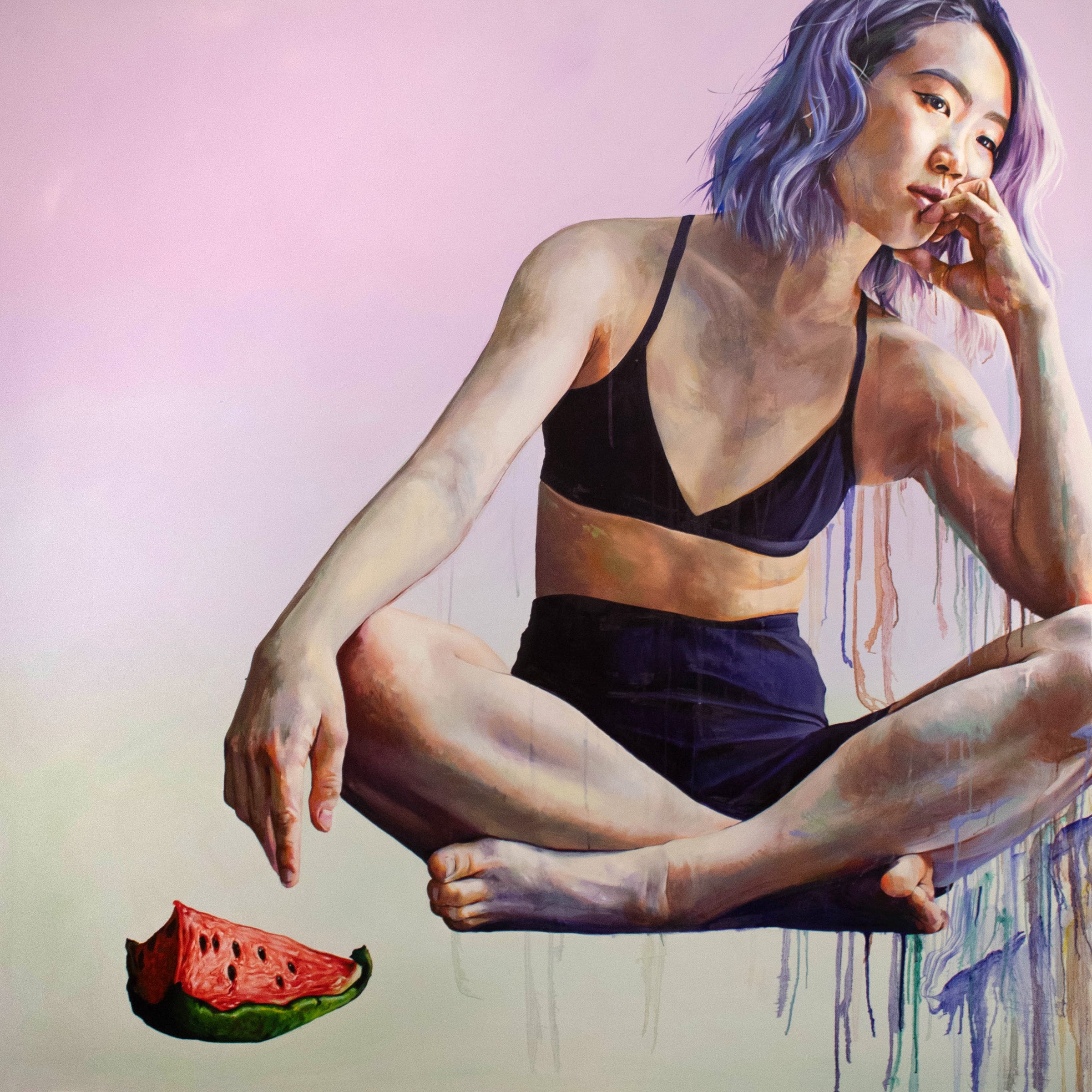
Watermelon

Isabel Lu

Oil on aluminum

Location: Betty Ray McCain Art Gallery (Meymandi Concert Hall, Lower Level)

Lu, a Chinese American visual artist and health equity researcher, focuses on self-exploration, belonging, and queerness, especially among the Asian American community. Lu enjoys the silliness and seriousness of using food as a meaningful symbol of objectification and ownership among queer Asian American (AA) figures from NC.

They are also redefining Traditional Chinese Medicine (TCM) theories and practices to examine their relationship to their body and asexuality. Both food and this redefining of TCM to self-explore are highlighted in her piece, Watermelon. 

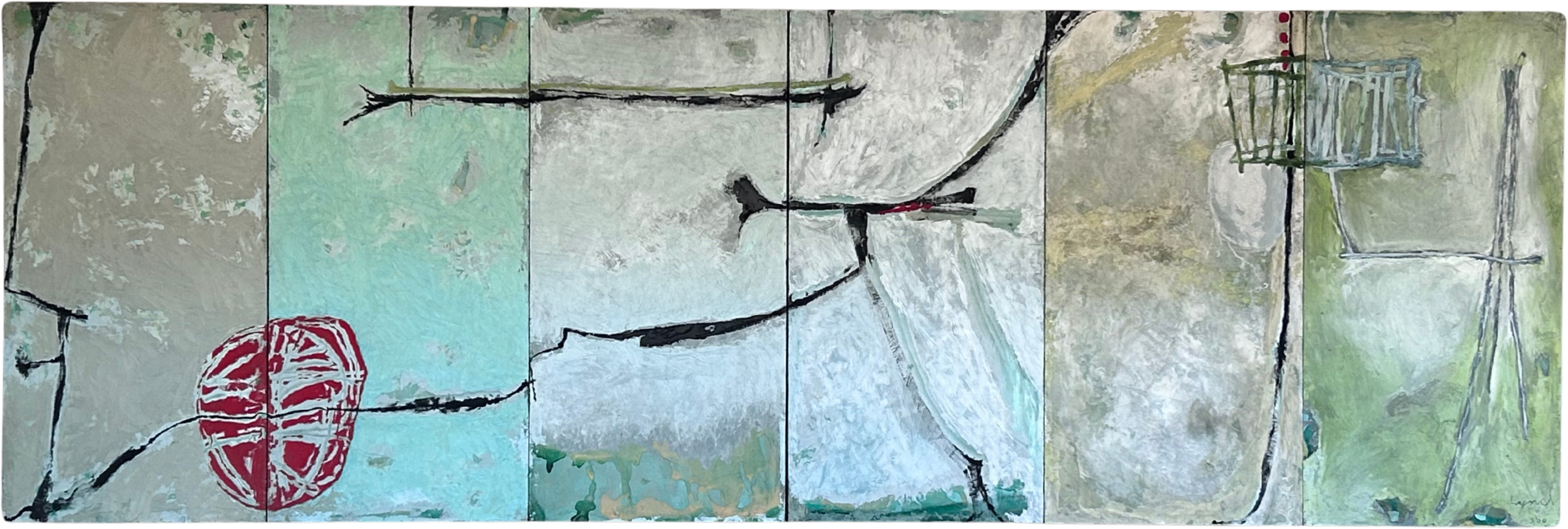
Six Days in May

Gerry Lynch

Oil on wood panels

Location: A.J. Fletcher Opera Theater, Lobby

Gerry Lynch's monumental six-panel work is a captivating interpretation of Arabic calligraphy, infused with inspirations from gardens, walls, and cultural motifs. The composition unfolds across six vertical panels in a serene palette of pale greens, whites, and subtle earth tones.

Bold, gestural lines, primarily in black, sweep across the expansive surface. These dynamic strokes echo the intricate, flowing nature of Arabic script, creating a sense of movement and visual poetry. Lynch's technique translates the complex patterns of her influences into fluid, expressive forms. Highlights like the striking red, segmented orb on the left and a structural, cage-like element on the right anchor the piece.

Through this artwork, Lynch invites viewers on a visual journey, exploring the rich cultural significance of calligraphy.

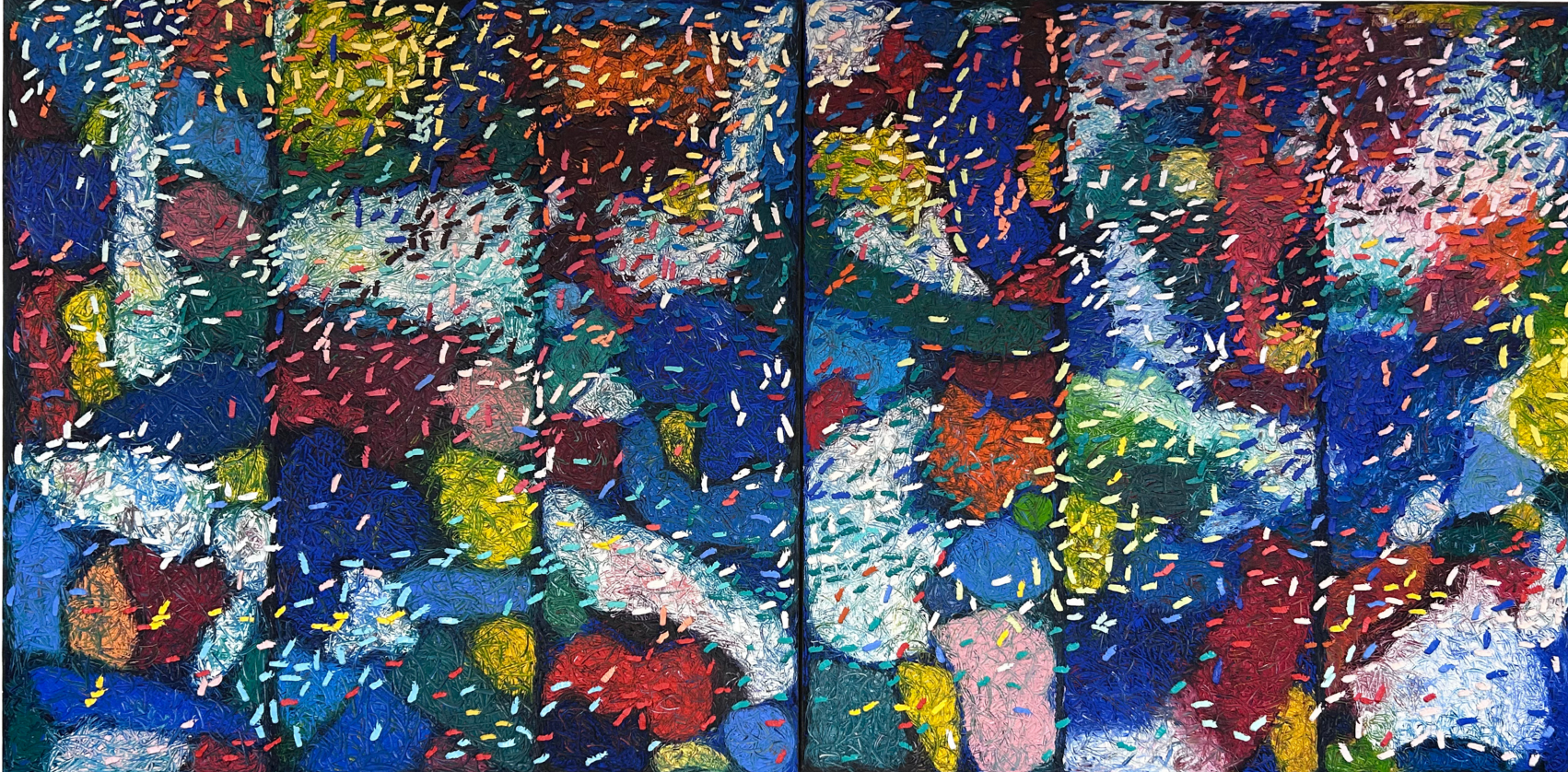
Celebration Diptych

Vincent Mastracco

Oil on linen

Location: Meymandi Concert Hall, Upper Lobby Staircase

This monumental work, Celebration Diptych, exemplifies Vincent Mastracco's signature style, characteristic of a "second generation abstract expressionist"—a label applied to him in a New York Times review. Mastracco, who worked from his Lower Manhattan studio, explored the purely abstract nature and very act of painting itself. The artwork showcases heavy, generous applications of thickly applied paint in a vibrant, organized pattern, possibly using his fingers and other tools. Though abstract, viewers may discern an underlying grid, which often served as the armature or structural backbone in his compositions. Mastracco's technique creates a rich, energetic, and celebratory surface.

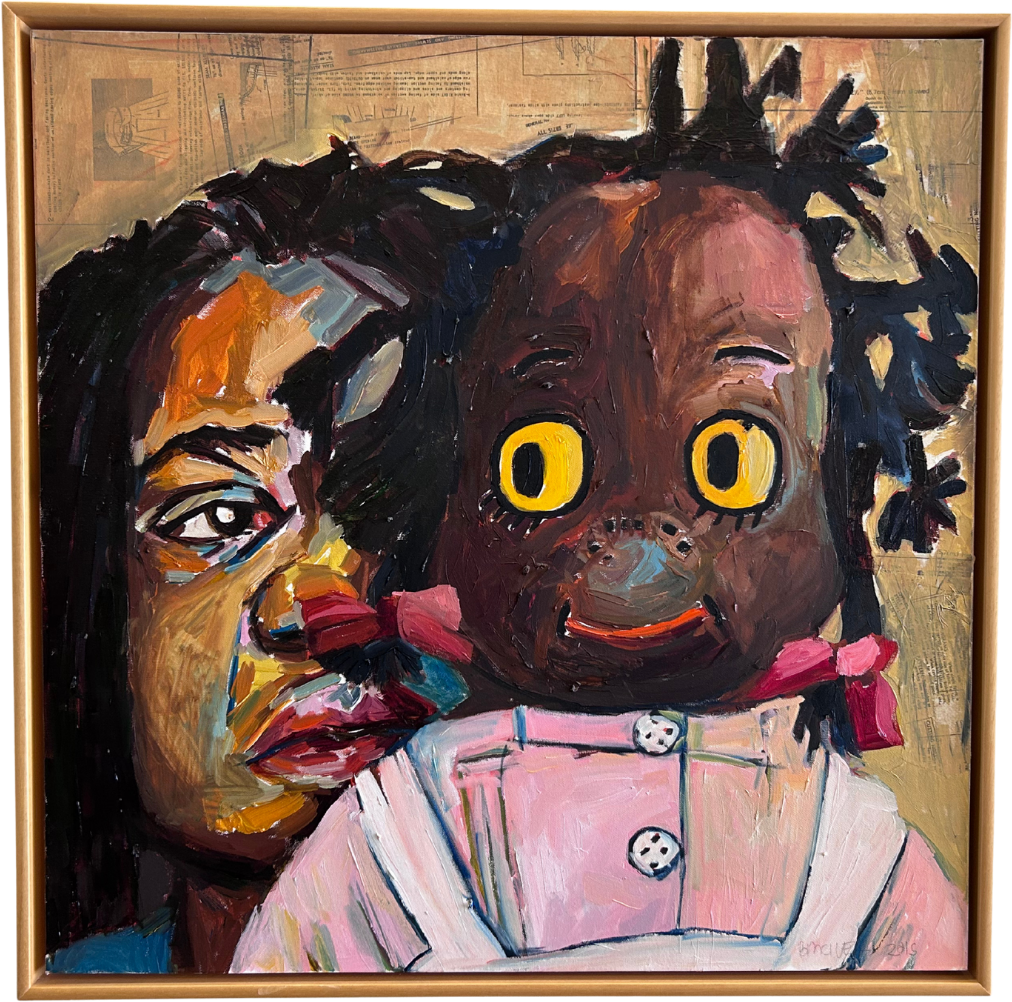
Time Travelers

Beverly McIver

Oil on canvas

Location: Betty Ray McCain Art Gallery (Meymandi Concert Hall, Lower Level)

“A dear friend found the doll shown in Time Travelers on an auction site. She won the bid and immediately gave her to me. I’ve received several black dolls over the years from friends and strangers. I found most of them unattractive and felt no connection with them. Some were racist Golliwog dolls. But this doll was different. She reminded me of myself as a child. I did not grow up with black dolls. The few dolls I had were white, with blonde hair and blue eyes. I loved my dolls, but I was aware that they did not reflect my image. This doll, whose name is Grace, is the doll I dreamed of. I found her cute and innocent. I fell in love with her instantly and was moved to paint her.”

Inspired by the above story, Time Travelers depicts McIver’s younger self holding the doll, Grace. Through this series of paintings, she explores how growing up Black in the American South impacts her to this day. She gives voice and speaks for those left in the margins, like her sister Renee, who is mentally disabled. 

On the Right Track but on the Wrong Train

Carmen Neely

Oil on canvas, enamel pins, embroidery

Location: Meymandi Concert Hall, Lobby

Coming from a lineage of sentimental black matriarchs who savored their possessions for decades, valuing each hat, saltshaker, and blanket as an eternal vessel for the spirit, it is only natural that most objects in Neely's world carry significant emotional weight. She collects random things to retain memories of events, conversations, and people. Collecting is about savoring experiences, and each object acts as a marker for places and incidents that would otherwise risk being forgotten. Her work is a result of this emphasis on both reflecting and relishing. Paintings and drawings serve as a means of "visual paraphrasing", relying on gestures that allude to personal specifics and formal relationships that embody memories.

Raleigh Memorial Auditorium

Dan Nelson

Oil on canvas

Location: A.J. Fletcher Opera Theater, Lobby

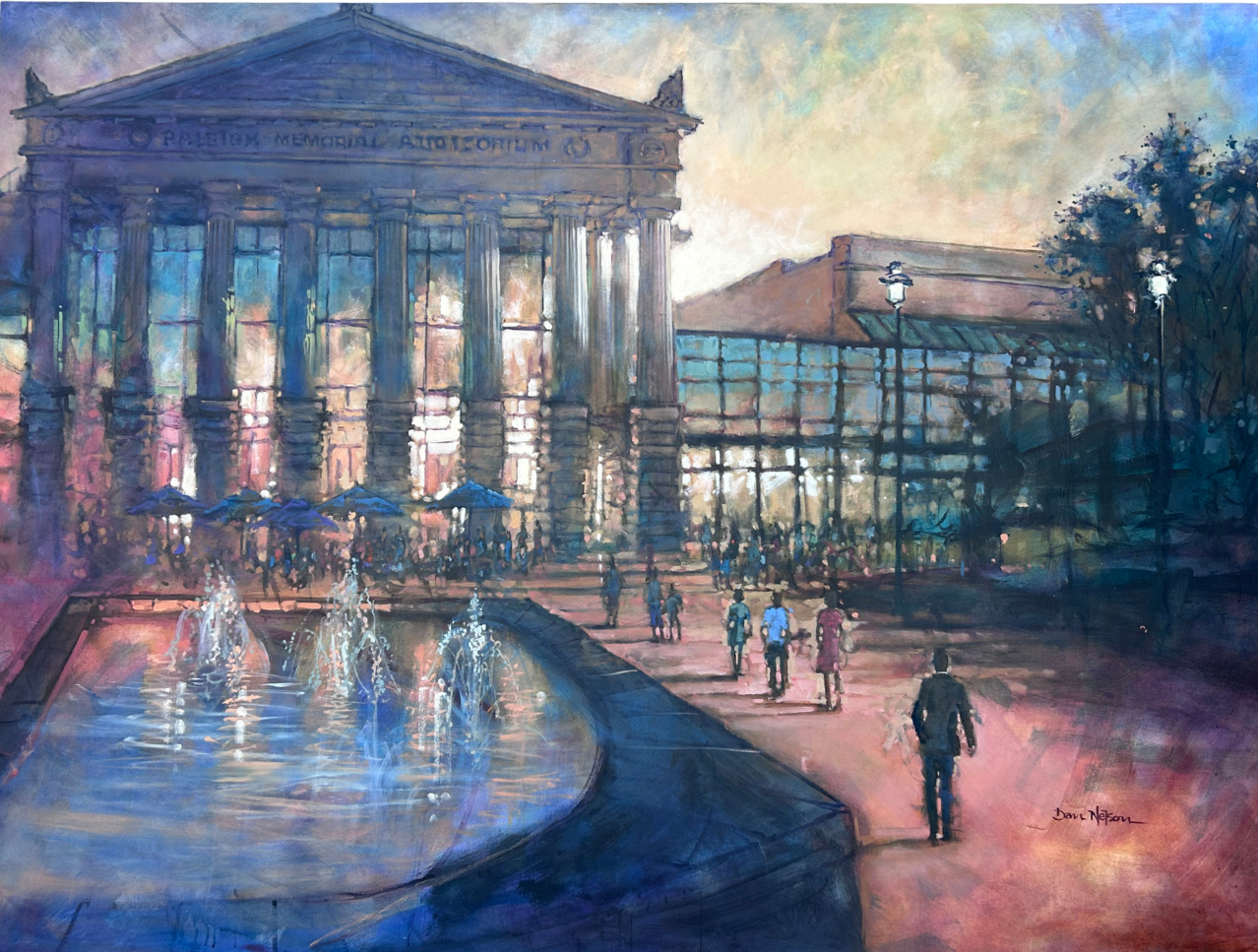
Painted en plein air during a 2012 arts festival, this monumental work captures the Raleigh Memorial Auditorium and Lichtin Plaza as a living civic stage. Working on site, Dan Nelson responds directly to changing light, weather, and pedestrian movement, allowing atmosphere and motion to shape the composition. Loose, expressive brushwork animates the neoclassical façade, while reflections in the fountain and glass surfaces suggest the rhythm of the city at dusk. Figures move through the plaza, emphasizing the building’s role as a gathering place for performance, culture, and public life.

Boundaries (holding the pieces in place)

Pete Sack

Oil and watercolor on paper

Location: Betty Ray McCain Art Gallery (Meymandi Concert Hall, Lower Level)

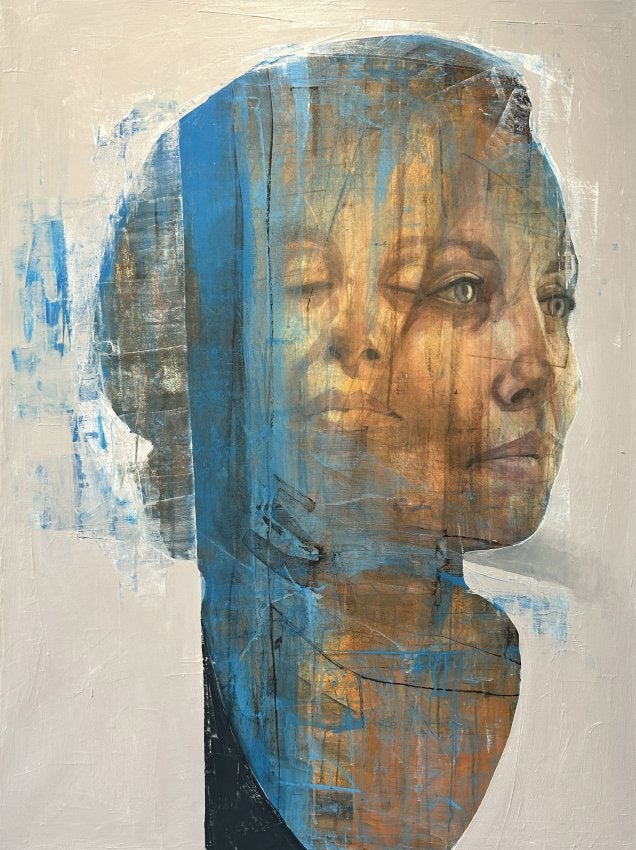
Raleigh artist Pete Sack, trained at East Carolina University, merges his affinity for oil paint with his lifelong passion for watercolor in this layered portrait. The work features a form containing two overlapping, semi-transparent depictions of the same woman’s face, one with eyes open and one closed. Sack’s art explores the "multitudes we all contain" and the layers of "masks we put on and take off" throughout life. He begins with a watercolor portrait and applies oil paint over it, capturing the "paradoxical beauty of donning masks to reveal the authenticity beneath." Realistically modeled features are disrupted by abstract washes of vibrant blues, oranges, and dark brown that streak and bleed across the image. The title, Boundaries (holding the pieces in place), speaks to the delicate balance between being genuine and the necessity for adaptation.

South Lowell

Damian Stamer

Oil on panel

Location: Raleigh Memorial Auditorium, Outer Lobby

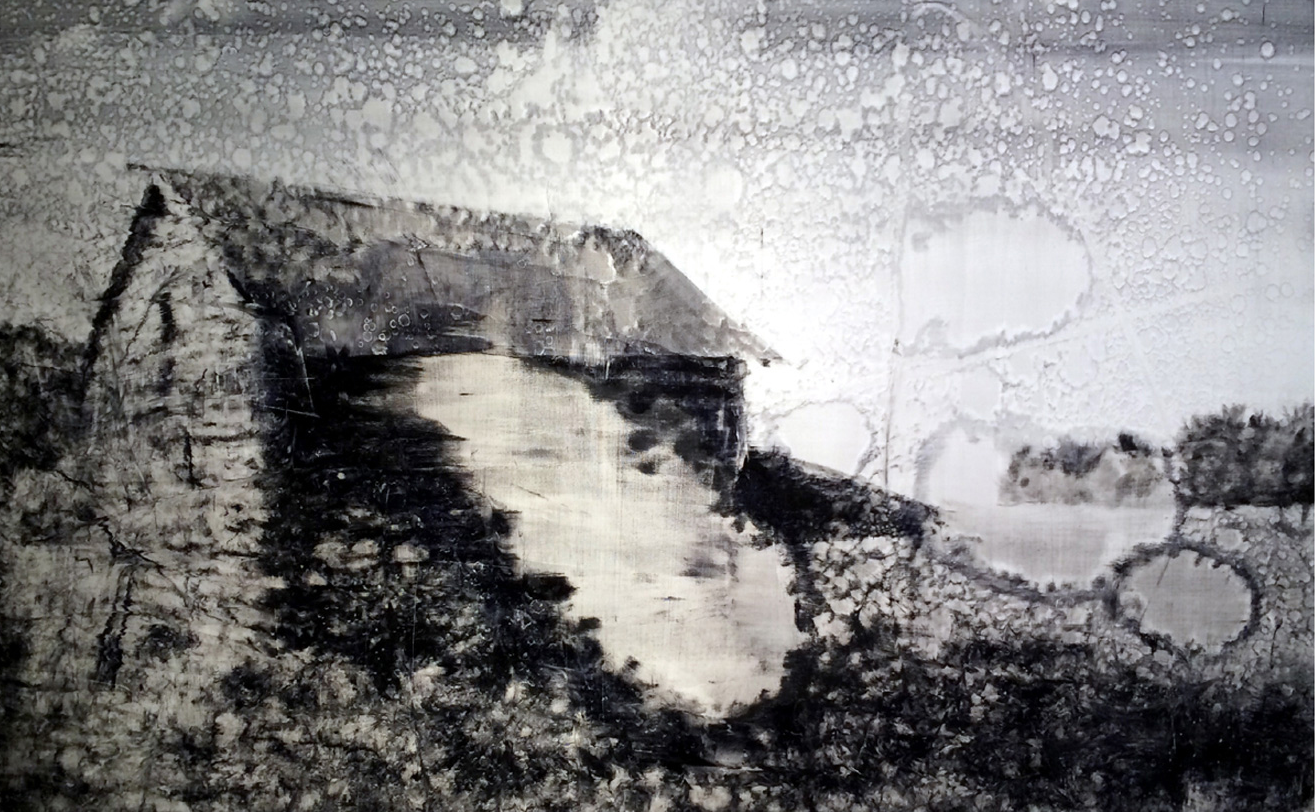
Rooted in his childhood spent exploring decaying barns and abandoned homesteads in rural Durham County, North Carolina, Damian Stamer’s work often depicts these vestiges of a bygone agricultural past. South Lowell showcases a modest barn near Bahama, North Carolina, rendered exclusively in a black-and-white palette.

Stamer returns to these sites, using photographs as a starting point for his large canvases. His labor-intensive process involves building up layers of paint, which he then scrapes, scratches, and sands to achieve a weathered, dissolving texture. This technique gives the structure a watery, smearing effect, as if it's disintegrating before your eyes, mimicking the decay that comes with the passage of time. Stamer's haunting landscape highlights the beauty of impermanence and the fading of memory, connecting the personal haunts of his past with a universal sense of loss and mortality.

With Brotherhood

Lien Truong

Oil and fiber on canvas

Location: Meymandi Concert Hall, Lobby

In With Brotherhood, Lien Truong creates a visual exploration of cultural ideologies, power, and migration. The artist is simultaneously drawn to the primordial act of painting and its contemporary relevance, using art as an "illuminating act" to understand modern belief systems.

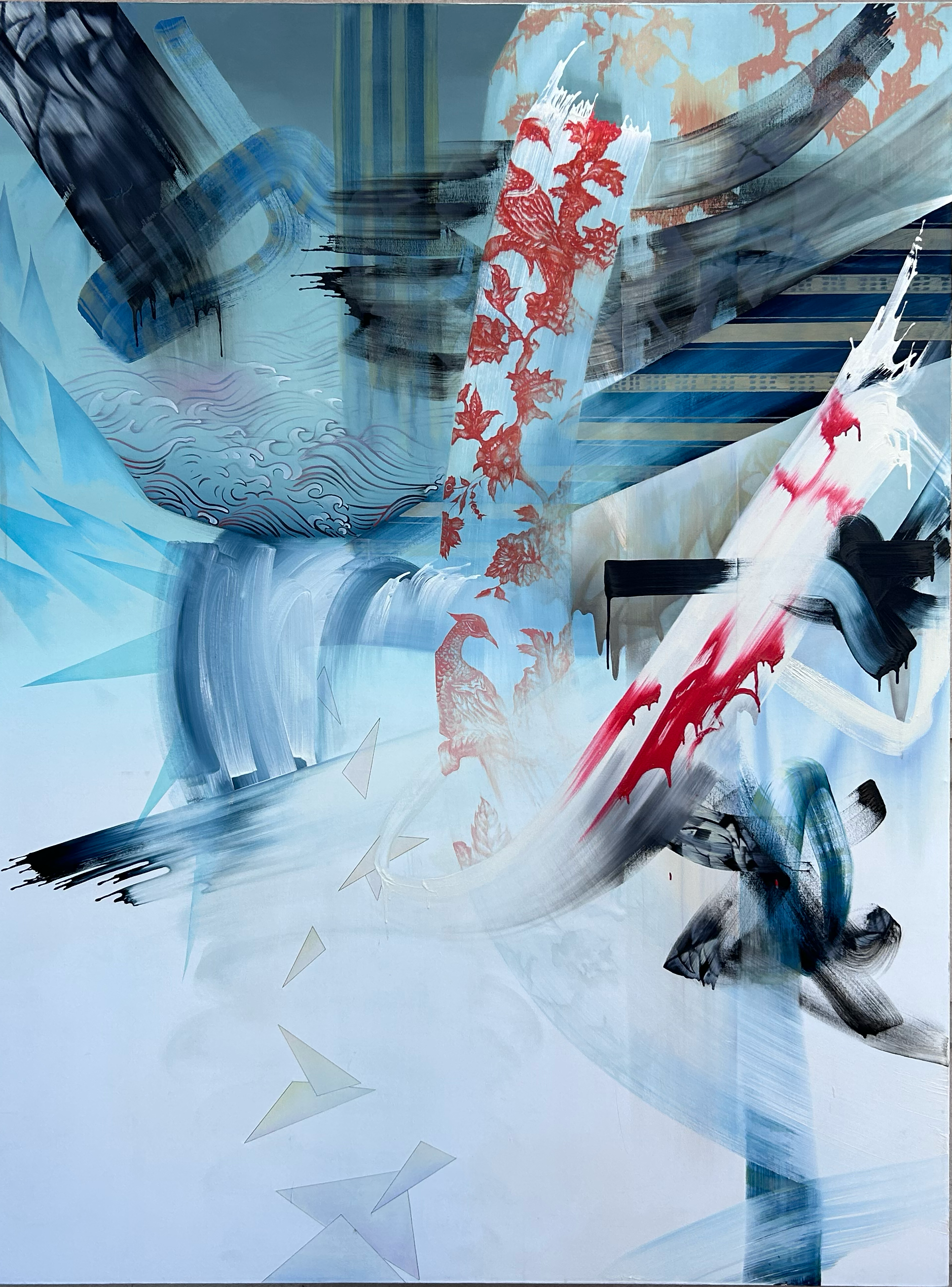
The painted surface operates as a "heterotopia"—a concept borrowed from French philosopher Michel Foucault—mirroring and distorting other spaces. Truong's gestures, reminiscent of textile designs from Asia, refer to a centuries-old worldwide textile trade and its "complicated narrative of migration, hierarchy, and power," including its links to slavery and colonialism. The fluid, enveloping forms and colors signify the "separation of nations" and the resulting "entanglement of vast, syncretic heterotopias," reflecting our complex, diasporic global world.

Window Pain

Telvin Wallace

Oil on canvas

Location: Betty Ray McCain Art Gallery (Meymandi Concert Hall, Lower Level)

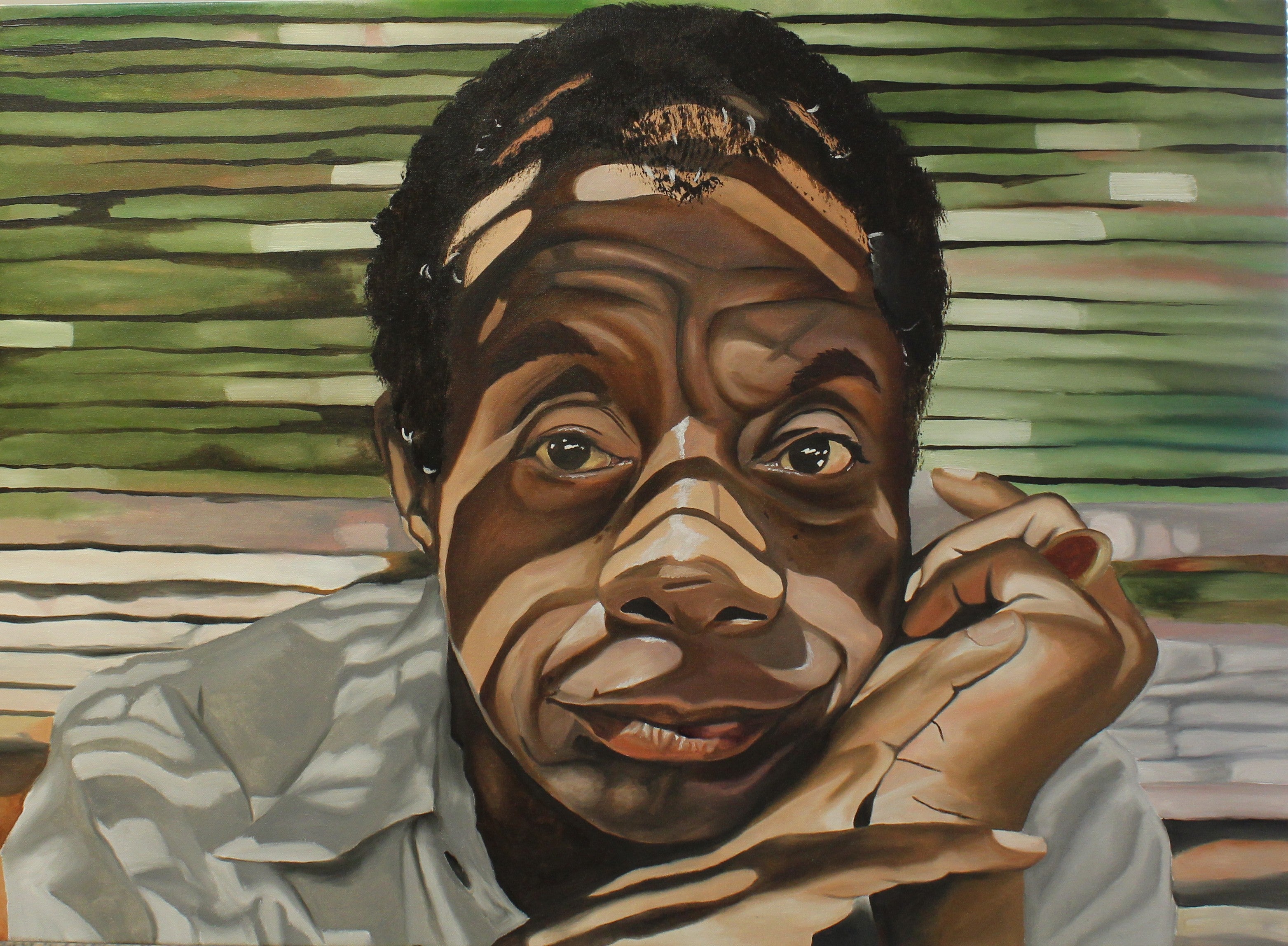
Telvin Wallace is an interdisciplinary artist whose work focuses on mental health and the human condition, specifically how a black man is perceived in society. He is a graduate of North Carolina Central University (BFA) and the New York Academy of Art (MFA). He has a deep understanding of color and light and often draws from historical imagery. His mesmerizing and psychologically charged work brings viewers face-to-face with contentious cultural issues while proclaiming the resilience of the human spirit. 

Black Appalachian Father

Cornell Watson

Digital print on cotton rag

Location: Betty Ray McCain Art Gallery (Meymandi Concert Hall, Lower Level)

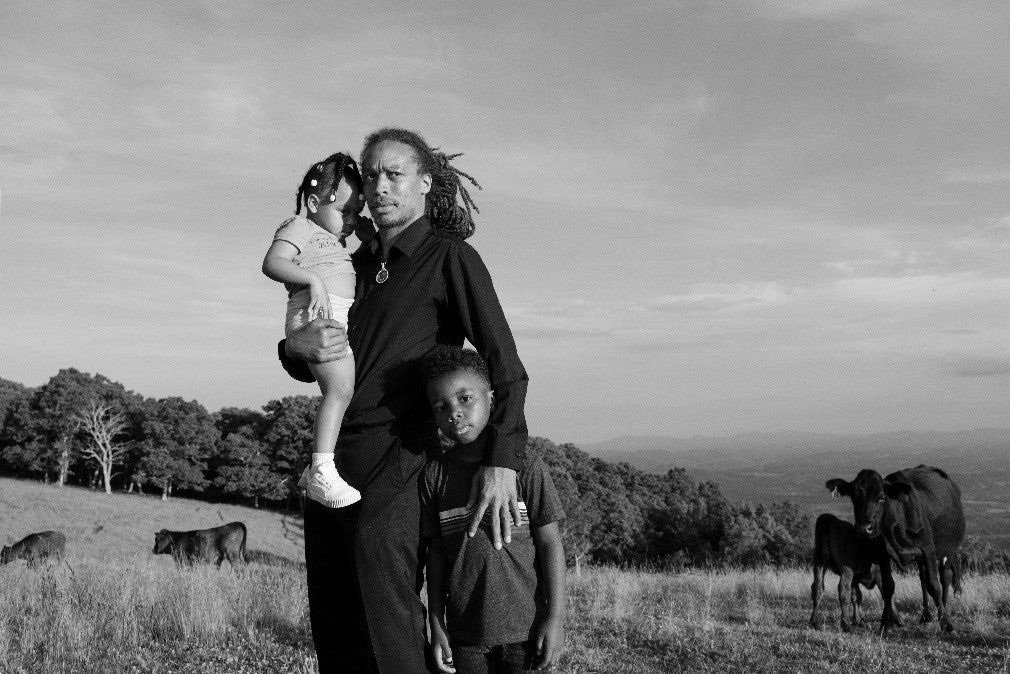
Watson is an award-winning photographer whose unique visual storytelling captures the Black experience. This work addresses the role of Fatherhood and those that have been lost. The small pendant worn by the central father figure memorializes a family member. “As a Black dad, Father’s Day hits a little differently. It’s hard not to think about the history of Black fatherhood and how our ancestors’ families were separated on plantations. It’s hard not to think about how part of my dad-duty will include giving my kids “The Talk.” We have to carry all of this while maintaining the responsibilities of parenting, and that’s not easy.”, states Watson.
Knife and the Wound

Antoine Williams

Acrylic, collage, ink, graphite on panel 

Location: Meymandi Concert Hall, Lobby

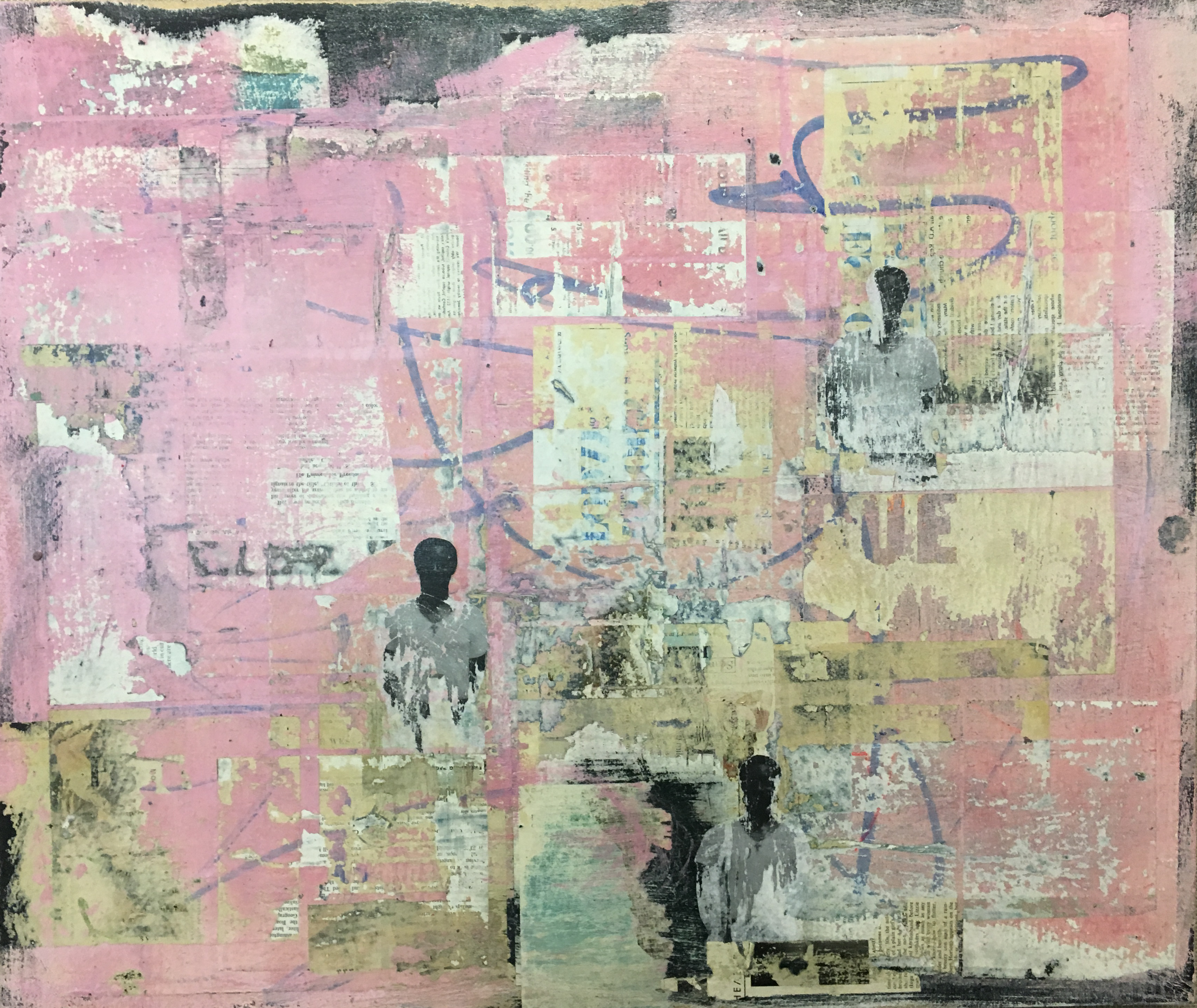
Williams has an interdisciplinary practice focused on investigating power, perception, and fear as they relate to institutional inequality. He has created a mythology about the complexities of contemporary Black life. Heavily influenced by social science fiction and sci-fi literature, themes such as relationships to what may be considered a foreign or alien body can be analogous to the many Black experiences in America. The result is a process-based practice involving mixed-media installation, painting, drawing, collage, and assemblage. These works are inspired by Williams's personal experiences from a rural working-class upbringing in Red Springs, North Carolina, which relate to broader contemporary concerns of race, class, and masculinity.

There Will Be No Miracles Here

Antoine Williams

Acrylic, collage, ink, graphite on panel

Location: Meymandi Concert Hall, Lobby

Williams has an interdisciplinary practice focused on investigating power, perception, and fear as they relate to institutional inequality. He has created a mythology about the complexities of contemporary Black life. Heavily influenced by social science fiction and sci-fi literature, themes such as relationships to what may be considered a foreign or alien body can be analogous to the many Black experiences in America. The result is a process-based practice involving mixed-media installation, painting, drawing, collage, and assemblage. These works are inspired by Williams's personal experiences from a rural working-class upbringing in Red Springs, North Carolina, which relate to broader contemporary concerns of race, class, and masculinity.

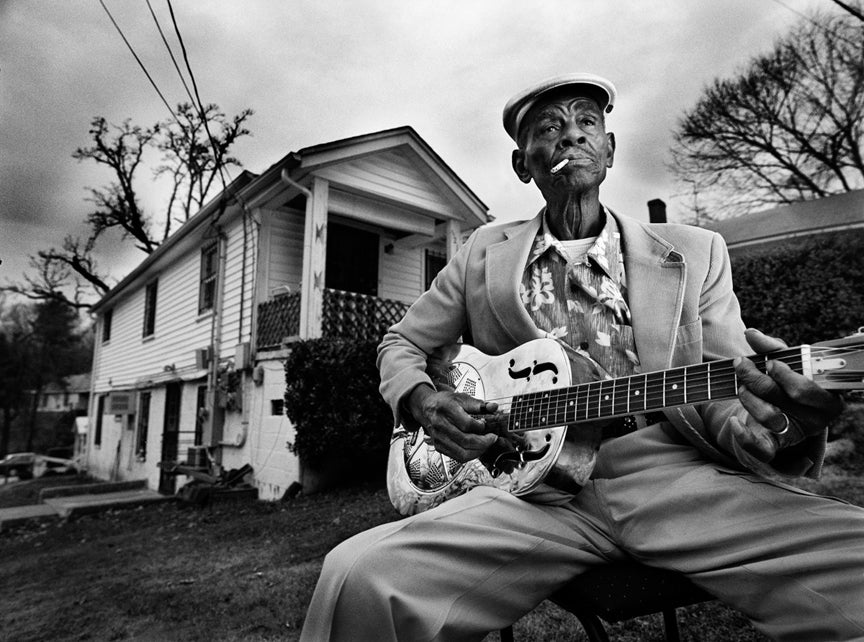
John Dee Holeman II

Jimmy Williams

Giclee print

Location: Betty Ray McCain Art Gallery (Meymandi Concert Hall, Lower Level)

This portrait of blues guitarist John Dee Holeman is part of Jimmy Williams’s Music Makers series, created in collaboration with the Music Maker Relief Foundation. The series honors elder blues and roots musicians across the American South—artists who helped shape the nation’s musical heritage yet often lived in obscurity and poverty. Williams met and photographed more than twenty musicians, spending hours listening to their stories before lifting his camera. His portrait of Holeman, who learned the blues while working on his family’s North Carolina tobacco farm, conveys both pride and perseverance. By portraying his subjects with dignity and quiet intensity, Williams preserves not just their likenesses, but the enduring spirit of American blues.

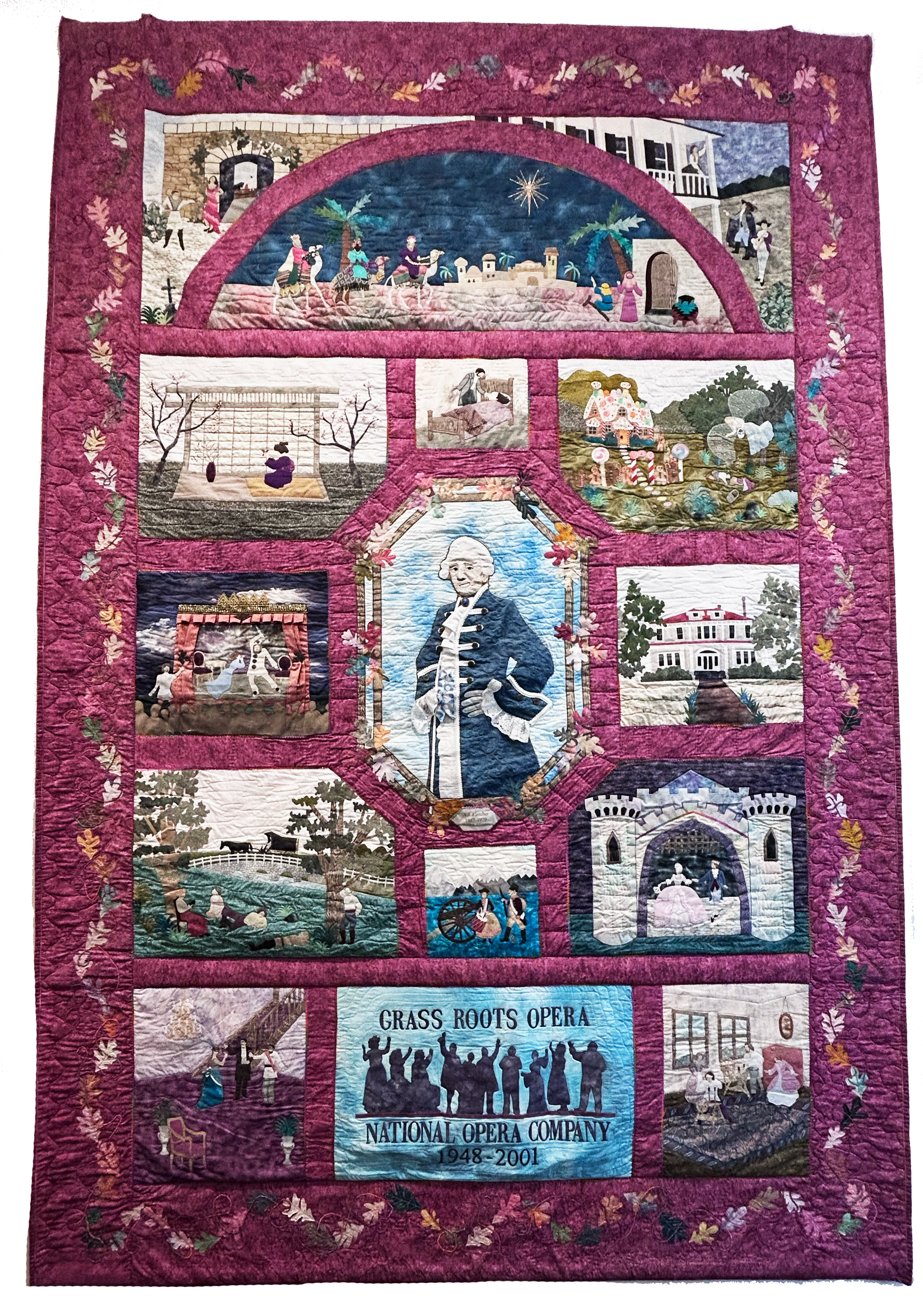
Grass Roots Opera - National Opera Company 1948 -2001

Amy Stewart Winsor

Cotton

Location: A.J. Fletcher Opera Theater, Upper Lobby Hall

Commissioned by the A.J. Fletcher Foundation, this monumental quilt by Cary artist Amy Stewart Winsor is a permanent tribute to A.J. Fletcher—an avid opera advocate and the namesake of the theater where it hangs. The pictorial quilt, which took 540 hours to complete, uses tiny pieces of fabric, beads, and ribbon to depict scenes from the Grass Roots Opera and the National Opera Company (both founded by Fletcher).

The textile is divided into 15 panels illustrating key moments from 53 years of performance, including favorites like Carmen, Madama Butterfly, and Martha, thought to be Fletcher's most cherished opera. The central image is a large portrait of Fletcher himself, based on a photo of him in costume. Oak leaves adorn the border, honoring Raleigh, "The City of Oaks." 

A Radiant Revolution I

Stephanie J. Woods

Archival ink-jet print

Location: Meymandi Concert Hall, Lobby

Woods is a multimedia artist whose works utilize symbolic imagery and materials that reference Black American culture and the southern experience, such as hair weave, satin bonnets, afro hair, Carolina red clay, and sweet tea.

“A Radiant Revolution” was inspired by graphic t-shirts featuring phrases such as “My Black is Beautiful,” Strong Black Girl,” and “Black Girl Magic.” The T-shirts are captured in a series of photographs that relate these expressions of empowerment to the history of head wraps. There was a time in history when sumptuary laws banned Black women from showing our hair. However, the head wrap then and now represents courage, ancestry, collective identity, and a uniform of rebellion that signifies the resistance to loss of self-definition.